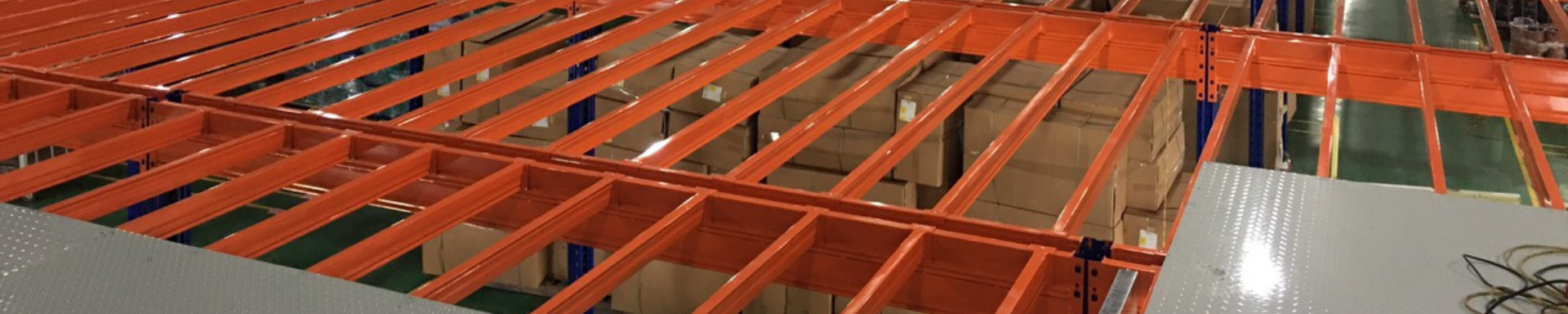
EBOOK: A COMPREHENSIVE GUIDE TO MEZZANINE FLOOR RACKING IN HOME APPLIANCES AND ELECTRICAL EQUIPMENT WAREHOUSES
Author: Product Design Department of Long Quyen Company
Below is a 6-chapter book, each focusing on a different aspect of Mezzanine Floor Racking for the Home and Electrical Appliances industry. The goal is to help readers get an overview and insight, from the basic concept to the implementation method, practical benefits, and future trends. In particular, the book also introduces Long Quyen – a leading shelf manufacturing company in Vietnam with more than 25 years of experience in this field.

CHAPTER 1: OVERVIEW OF MEZZANINE FLOOR RACKING
1.1. Background and trend of using mezzanine floor shelves in the Household Appliances and Electrical Appliances industry
Warehouse plays an important role in the supply chain of every business, especially in the Home Appliances and Electrical Equipment industry. With the explosion of e-commerce and diverse consumer demand, manufacturers and distributors are increasingly focusing on optimizing warehouse space, reducing costs, and improving operational efficiency. In this context, the Mezzanine Floor Racking solution has emerged as a strategic choice, helping businesses fully exploit the space according to height, expand the storage area without investing in additional land area.
Mezzanine floor shelves are no longer a strange concept in the world, but in Vietnam, the application and correct understanding of this system is still in the process of development. Many businesses in the Home Appliances and Electrical Equipment industry realize the great potential of this solution but do not have enough in-depth documents and practical experience to apply it optimally. Therefore, a comprehensive guidebook is needed to provide basic knowledge and implementation experience for managers, engineers as well as warehouse managers.
1.2. The concept of “Mezzanine Floor Racking” and its importance
-
What is Mezzanine Floor Racking?
This racking system allows for the creation of one or more mezzanine floors inside the warehouse. The mezzanine floor structure is usually built on steel columns and beams, which significantly increases the usable area without having to expand the warehouse horizontally. -
Importance to the Home Appliances and Electrical Appliances Industry:
- Optimize space according to height: Household products and electrical appliances come in a wide variety of sizes and weights, from bulky rows (e.g. washing machines, refrigerators) to compact rows (light bulbs, accessories). Each segment requires a different way of hosting. Mezzanine floor shelves allow you to design a separate area to store each group of goods, both scientifically and space-saving.
- Improve the efficiency of goods management: Thanks to the expansion of space, businesses can arrange the flow of incoming and outgoing goods more clearly, minimizing errors in inventory management (Inventory Management).
- Suitable for expansion strategy: When market demand increases rapidly, this solution gives businesses the flexibility to increase storage space without having to spend too much money to build a new warehouse.
1.3. Overview of structure and principle of operation
Although the design can vary depending on the supplier and warehouse characteristics, a basic mezzanine floor shelving system typically consists of the following key components:
-
Columns:
- It is the main bearing component, made of high-strength steel. The column frame is arranged in pre-calculated positions to bear the overall load.
- In the field of English expertise, column frames are often referred to as “Upright Frames” or simply “Columns”.
-
Beams:
- The connection between the column frames, responsible for supporting the floor (flooring) and the goods above.
- The common English term is “Main Beams” or “Secondary Beams”, depending on the main or secondary function.
-
Flooring:
- It can be made of wooden boards, steel panels or mesh decking.
- For heavy household goods, steel decking or high-quality wooden planks are often preferred.
-
Stairs and Handrails:
- To safely move goods and people to the mezzanine, stairs and railings are indispensable.
- The English are commonly referred to as “Staircases” and “Handrails” or “Guardrails.”
-
Safety systems:
- For lifting goods (escalators, carousels or forklifts can be used).
- There are also overload protection devices, safety alarms, etc.
The mezzanine floor shelving system works on the principle of separating the space along the height. When goods are arranged on floors, the import-export process will also be optimized based on product characteristics, rotation frequency and means of transportation.
1.4. Why Mezzanine Floor Shelving is so popular in the Home Appliances and Electrical Appliances industry
- Variety of cargo sizes:
The household appliances and electrical appliances industry requires many separate storage areas for light, fragile, heavy, and bulky goods. Mezzanine floor shelves allow for “functional zones”. - Save on warehouse expansion costs:
Building more mezzanine floors inside an existing warehouse is often cheaper than building a new warehouse or renting a new warehouse. - Increased Operational Performance:
The mezzanine arrangement helps to divide the flow of goods. For example, the lower floor is for heavy goods or goods with high rotation frequency, the upper floor is for reserve goods or goods with little movement. - Easy to customize, disassemble:
Mezzanine floor shelves can be adjusted in size, height, or disassembled when not in use, suitable for a flexible business strategy.
1.5. Brief introduction of Long Quyen Company
In the context of increasing demand, Long Quyen has emerged as one of the leading prestigious enterprises in Vietnam in the field of manufacturing and installing warehouse racking systems. With more than 25 years of experience and countless large and small projects, Long Quyen has built a brand image based on:
- Product Quality: Using specialized steel, modern production technology, ensuring optimal durability and load.
- In-depth consulting: A team of engineers and experts with a deep understanding of the needs of each field, especially the Household Appliances and Electrical Equipment industry.
- After-sales service: Maintenance, technical support, and optimization of solutions for each stage of development of partner enterprises.
Many large domestic and foreign customers have trusted Long Quyen to deploy the mezzanine floor racking system, thanks to its unique design ability, effective use of space and commitment to safety.
1.6. Common mistakes
Despite their popularity, mezzanine floor shelves are also easy to be misunderstood or improperly applied. The following are some common errors:
- Load Capacity Assessment:
Quite a few businesses only make general estimates of the load, leading to the design of column frames and horizontal beams not being durable enough, potentially causing the risk of floor collapse or deformation. - Arrangement of stairs and passages is not reasonable:
Arranging stairs in a hard-to-reach location or not ensuring safety when transporting bulky goods is a common mistake. - Lack of mezzanine management process:
Although there is an additional mezzanine, without a proper material handling process, warehouse efficiency may not be improved.
1.7. Chapter 1 Epilogue
Chapter 1 has introduced the general picture of mezzanine floor shelves, from the concept, structure to the reasons why this solution has become popular in the Home Appliances and Electrical Appliances industry. At the same time, this chapter also lays the foundation for the appearance of Long Quyen – a unit with more than two and a half decades of practical experience, which is a guarantee of high quality and applicability of products.
In the next chapters, we will delve deeper into the benefits, design, installation, operation and investment strategies, risk management, and predict the future trend of mezzanine floor shelves.

CHAPTER 2: BENEFITS AND PRACTICAL APPLICATIONS OF MEZZANINE FLOOR SHELVES IN THE HOUSEHOLD APPLIANCES AND ELECTRICAL APPLIANCES INDUSTRY
2.1. Expand storage space flexibly
One of the major problems that warehouses in the Home Appliances and Electrical Appliances industry often face is fluctuations in the type and size of goods. For example, warehouses may have to contain both small products such as power plugs, to huge items such as side-by-side refrigerators. To meet this diverse demand:
- The mezzanine floor is designed to classify goods by area: light cargo storage area on the upper floor, heavy cargo storage area on the lower floor.
- The ability to install multiple floors (multi-level) allows businesses to make the most of the height of the warehouse.
English terms to pay attention to:
- “Space Utilization”: Optimize space.
- “Multi-level Mezzanine”: Multi-level mezzanine, providing flexible scalability.
2.2. Enhancing the efficiency of management and circulation of goods
As the scale of goods grows, the clear zoning of storage will help reduce the time to search and inventory, and at the same time increase the speed of turnover. This convenience also comes from the ability to arrange the lines of goods according to the frequency of sales. For example:
- Fast-moving items are stored on the ground floor or mezzanine near the aisle, which is convenient for delivery.
- Slow-moving items can be stored on higher floors or in hidden corners.
Moreover, with a mezzanine floor racking system, the arrangement of tools such as “conveyor belts” or “vertical lifts” to move goods between floors will help optimize labor efficiency and minimize the risk of accidents.
2.3. Save costs and improve return on investment (ROI)
One of the significant benefits of mezzanine floor shelves is to help businesses save on warehouse expansion costs. Instead of renting or buying more space, businesses can renovate the available space:
- Lower construction costs: Building more mezzanine floors inside an existing warehouse is often less expensive than building a new building or factory.
- Fast construction time: The installation process of mezzanine floor shelves, if scientifically designed, can be completed in a short time, minimizing business interruptions.
- Increased real estate value: Warehouses with flexible mezzanine floors are often valued higher, especially when businesses need to transfer or sublease.
Thus, the Return on Investment (ROI) from investing in mezzanine floor shelves is quite impressive, especially when the warehouse is operated efficiently and for the right purpose.
2.4. Optimize workflow and labor productivity
The scientific layout of the space will reduce the travel distance of warehouse staff, limit errors and improve productivity. In particular, mezzanine floor shelves:
- Create a reasonable internal traffic flow (Internal traffic flow): If the lower floor is mainly used for importing and exporting goods, the mezzanine floor can be arranged as a place for packing, inventorying or small assembly.
- Reduce congestion: When businesses have a large volume of exports and imports, taking advantage of the mezzanine layer helps disperse the density of employees and means of transportation.
In addition, businesses can apply the “ABC Analysis” method or commodity classification techniques to determine which products are stored in the most convenient location, thereby improving labor efficiency.
2.5. Supporting the expansion of product lines and value-added services
In the Home Appliances and Electrical Appliances industry, competition is not only about selling products, but also about accompanying services. Mezzanine floor shelves allow businesses to add service areas right in the warehouse:
- Repair & Warranty Center: The mezzanine floor can be used as a place to check products, replace small components, and provide a quick warranty.
- Showroom: In some cases, a beautifully designed mezzanine can also serve as a sample product display area, helping customers to visit and make decisions.
Integrating warehouse operations with value-added services on-site not only saves time and costs but also improves customer experience.
2.6. The role of Long Quyen Company in realizing benefits
Long Quyen not only provides standard mezzanine floor shelves, but also deeply participates in the process of consulting and designing customized solutions, ensuring that businesses in the Household Appliances and Electrical Equipment industry receive:
- Optimal solution: A team of engineers surveyed the field, calculated the load, analyzed the flow of goods, thereby proposing a suitable mezzanine floor shelf design.
- Quality and Durability: Steel and materials are used from reputable suppliers, closed production processes and inspections, ensuring a long service life.
- Installation and maintenance services: Long Quyen supports from installation, operation training to periodic maintenance, helping to maintain stable warehouse performance.
2.7. Practical examples of mezzanine floor shelf applications
- In the case of a large-scale household electrical distribution center in Ho Chi Minh City. HCM:
After installing the two-level mezzanine designed by Long Quyen, the usable area increased by about 40%. The separation of the area for storing air conditioners and washing machines (which require large space and high loads) on the ground floor and the area for components and accessories on the mezzanine floor, has helped reduce the time to search for goods by 30%. - A warehouse specializing in storing rice cookers and induction cookers for the export market:
This business has used the mezzanine floor as a packaging and labeling area, doubling the time to prepare orders, increasing operational flexibility.
2.8. Chapter 2 Conclusion
Mezzanine floor shelves bring many practical benefits and have high applicability in the Household Appliances and Electrical Appliances industry. From optimizing space, saving costs, to improving management efficiency and expanding services, this is a solution that brings sustainable value to businesses. With extensive experience, Long Quyen plays an important role in consulting, installation and maintenance, helping businesses make the most of the advantages of mezzanine floor shelves, drive-in racking, selective racking
In Chapter 3, we will delve deeper into the design, construction, and important technical terms associated with mezzanine floor shelving, including load calculations, the selection of the right flooring materials, and safety factors that cannot be ignored.

CHAPTER 3: DESIGN, CONSTRUCTION, AND IMPORTANT TECHNICAL TERMS
3.1. Overview of the design process of mezzanine floor shelves
To build an effective, safe and sustainable mezzanine floor racking system, the design process requires close coordination between the team of engineers, suppliers and operators. The design process typically includes:
-
Site survey and storage needs:
- Determine the maximum height of the warehouse, column position, exit-entry door location, office area, etc.
- Evaluate the type of goods, average weight, standard size.
-
Load Analysis:
- Calculate static load and dynamic load on each point.
- Consider adding loads from people, forklifts, moving equipment (if any).
-
Selection of frame and beam structures:
- Design upright frames with appropriate profiles and thicknesses.
- The selection of horizontal beams (beams) has good bending, tensile and compression resistance.
-
Choosing a flooring material:
- It can be “Steel Grating” , “Wooden Boards” , or “Steel Decking” .
- Each option has its own pros and cons, depending on the requirements for moisture resistance, slip resistance, and load.
-
Arrangement of stairs, walkways and lifting areas:
- Locate stairs and handrails for safety and convenience.
- Arrange the lifting area (if using an elevator or conveyor belt).
3.2. Load Analysis and Safety Factors
3.2.1. Static Load and Dynamic Load
- Static Load: It is the total weight of the cargo, floor, frame structure, etc. that always exists during normal operation. For example, if the mezzanine contains 10 tons of cargo, this value of 10 tons is considered a static load that is evenly distributed or concentrated depending on the arrangement.
- Dynamic Load: It is the impact force generated by moving, vibrating, accelerating activities (e.g., when using forklifts, moving workers, vibrating machinery).
In practice, the engineer will add a safety factor to ensure that the mezzanine floor shelves can withstand loads that exceed a certain level compared to the theoretical design.
3.2.2. Safety standards
Internationally popular safety standards include:
- OSHA (Occupational Safety and Health Administration – USA) is concerned with regulations on stairs, railings, and structural durability.
- ISO 9001 or ISO 45001 for quality management and occupational safety.
- EN Standards (European Standards) specifies floor loads, rack frame design.
In Vietnam, reputable suppliers such as Long Quyen often refer to a combination of domestic and international standards to ensure the highest safety and quality.
3.3. Flooring Materials and Technical Notes
-
Wooden Boards:
- Advantages: Cheap price, fast installation, convenient to replace.
- Disadvantages: Not good moisture resistance, easy to termites, warped if the quality of the wood is poor.
- Application: Suitable for warehouses that do not require excessive loads or dry environments.
-
Steel Grating:
- Advantages: Breathable, good drainage, easy to clean.
- Cons: Can be inconvenient to move around with a small stroller.
- Application: Suitable for warehouses that need ventilation, areas with fire protection requirements.
-
Steel Decking:
- Advantages: High strength, durability, good moisture resistance.
- Cons: The price is usually higher, the weight of the self is heavier.
- Application: Ideal for heavy, bulky cargo storage areas.
3.4. Staircases and Handrails
The installation of stairs and railings is not only related to aesthetics but also directly affects occupational safety. Some notes:
- Riser Height and Tread: Safety regulations should be followed to reduce the risk of tripping.
- Handrails and Guardrails: It is mandatory if the mezzanine height is over 1m (according to many international standards). The gap between the railing bars is not too wide to avoid accidents.
- Emergency exit layout: In the event of a fire or explosion, a flexible emergency exit is required.
3.5. Material Handling Equipment
To move goods up and down the mezzanine floor, businesses can use:
- Forklift: Usually applied to the ground floor area. To lift goods to the mezzanine floor, it is necessary to design a gap or loading gate.
- Freight Lift: Suitable for bulky and heavy goods, reducing the risk of accidents when having to move by stairs.
- Incline Conveyor: Usually applicable to lightweight, uniformly sized products.
3.6. Analysis of some important technical terms
- “Clear Height”: The vertical gap from the ground floor to the horizontal beam of the mezzanine. This parameter determines whether the mezzanine can be installed or not and at what height.
- “Dead Load” vs. “Live Load”:
- Dead Load: Fixed weight of the structure (frame, floor, etc.).
- Live Load: Weight of goods, people, mobile devices.
- “Deflection”: The deflection of the beam under load. If the deflection exceeds the regulations, it is necessary to increase the cross-section or change the material.
- “Point Load” vs. “Uniform Load”:
- Point Load: A concentrated load, e.g. a very heavy package placed at one point.
- Uniform Load: The load is evenly distributed over the entire floor surface.
3.7. The role of Long Quyen in design and technical consulting
With more than 25 years of operation, Long Quyen has built a team of engineers and experts with extensive knowledge of load calculation, material selection, and compliance with safety standards. The consultation process usually includes:
- Business Needs Analysis: Quantity, size, volume, frequency of goods circulation.
- Load Simulation: Use specialized software (e.g., AutoCAD, SAP2000, SolidWorks) to simulate impact forces.
- Material consulting: Evaluate the pros and cons of each type of flooring, column frame, and beam to find the best solution.
- Quality inspection: Ensure that all parts are manufactured and installed to standards, accompanied by a long-term warranty and maintenance.
3.8. Chapter 3 Summary
Chapter 3 has delved into the technical aspects of mezzanine floor shelving, including the design process, load analysis, material selection, and structural layout. It is important for businesses to coordinate with reputable suppliers such as Long Quyen to ensure that mezzanine floor shelves are designed correctly, meet safety standards and operate effectively.
In Chapter 4, we will explore in detail the installation process, operating process, as well as safety standards and practical experience that Long Quyen shares.

CHAPTER 4: INSTALLATION PROCESS, OPERATING PROCEDURES AND SAFETY STANDARDS
4.1. Pre-Installation Preparation Phase
Before installing mezzanine floor shelves, businesses need to take some careful preparation steps:
-
Floor Slab Inspection:
- The flatness and load-bearing capacity of the warehouse floor must meet the requirements.
- If the foundation is not strong enough, it is necessary to reinforce or use larger base plates.
-
Cleaning and rearranging the premises:
- Temporarily relocate goods, clear obstacles, and ensure that the construction area is clear.
- Clearly delineate the storage area, the frame assembly area, and the equipment moving area.
-
Preparing the lifting equipment:
- If installed at height, lifting equipment (mini cranes, forklifts) is required to bring the beam and floor up.
- Ensure these devices are tested for safety, with trained operators.
4.2. Standard Installation Procedure
A standard installation procedure typically goes through the following steps:
-
Locate the main column and beam:
- Based on the design drawings, the technical team marks the position of each column (upright frames).
- Install the column, fix it with anchor bolts or base plate welding depending on the actual conditions.
-
Installation of Beams:
- The main beams are attached to the column by bolt tightening or clip-in depending on the design.
- Next, secondary beams or bracing bars are installed to increase rigidity.
-
Flooring:
- Steel floor panels, wooden planks or steel mesh are fixed to the beam system.
- Check the flatness and tightness of the floor, avoid leaving large gaps that cause danger.
-
Installation of stairs and railings:
- The staircases are installed in the designated position, ensuring the inclination, number of steps and safe handrails.
- Handrails are installed around the edge of the mezzanine floor, with kick plates to prevent things from falling.
-
Detailed Finishing and Safety Check:
- Check the joints, tighten the bolts, make sure there are no loose parts.
- Measure the balance, test the load if necessary.
4.3. Operation process of mezzanine floor shelves
After completing the installation, in order to operate the mezzanine floor shelves safely and effectively, businesses need to apply the following processes:
-
Inbound & Outbound Flow:
- Clearly stipulate which goods are stored on the ground floor and which are on the mezzanine floor.
- Assign specific tasks to warehouse staff, guide aisles, prohibited areas.
-
Periodic Inspection:
- Monitor the current status of frames, beams, and floors, especially at points of concentration of force.
- Consider signs of warping, cracks in the floor, termites (if using wood).
-
Load Management:
- It is not recommended to queue for more than the allowable load, a clear load capacity sign is required.
- Make sure the goods are evenly distributed, avoid piling up the load in one place.
-
Lifting Protocols:
- If using a forklift, it is necessary to train staff to operate safely, comply with regulations on speed and rotation angle.
- For lifting elevators, it is necessary to check the sensors, safety locks before operation.
4.4. Safety standards and risk prevention
-
Fire Safety:
- Ensure that mezzanine floor shelves do not obstruct emergency exits, arrange fire alarm systems and fire extinguishers in convenient locations.
- If flammable materials (such as wood planks) are used, fire retardant treatment should be applied or other materials should be considered.
-
Signage & Guidance:
- Clearly mark the maximum load, emergency exit, and dangerous area (if any).
- Warning of angular areas, stairs, low ceilings.
-
Staff Training:
- Training on operating procedures, occupational safety, and how to handle incidents.
- Create a culture of safety: encourage employees to report any problems in a timely manner.
-
Maintenance & Inspection:
- Although the steel structure is durable, it is still necessary to periodically check the bolts, welds, and floors.
- Schedule maintenance or re-tightening of bolts at least once a year, or as recommended by the manufacturer.
4.5. Practical experience from Long Quyen
Long Quyen has accumulated experience in installing mezzanine floor shelves for hundreds of domestic and foreign warehouses. Some of the valuable lessons include:
- Focus on the initial survey: Sometimes, businesses misestimate the available height, leading to an unreasonable mezzanine design. Long Quyen always sends experts to survey the field and measure accurately.
- Design Flexibility: Warehouse space is rarely square. The customization of mezzanine floor shelves according to wall angles, load-bearing columns, sloping ceilings,… is the key to maximizing the area.
- Follow safety procedures: Provide operating instructions for employees, install load signs, emergency exits. Long Quyen is committed to the post-installation inspection process to ensure customer peace of mind.
4.6. Final Acceptance Steps
-
Structural Inspection:
- Measure the distance between the columns, see if there is a deviation from the blueprint.
- Make sure there are no open joints, the bolts are tightened with the correct force.
-
Functional Test:
- Try using the stairs, see safety.
- Load test at 10-20% excess of the design load to determine durability.
-
Safety Check:
- Consider signs, emergency exits, fire extinguishing systems, emergency lights.
- Ensure all requirements comply with applicable safety standards.
-
Handover & Documentation:
- Long Quyen often provides Operation Manual with as-built drawings.
- Specify the load regulations and maintenance procedures.
4.7. Chapter 4 Conclusion
Chapter 4 emphasizes the importance of adhering to installation, operation, and safety standards for mezzanine floor shelving. This is an extremely important stage, because even though the design is optimal, if the construction is not up to standard or operated in the wrong way, the system cannot promote the maximum efficiency, even causing danger. Long Quyen, with rich practical experience, provides customers with not only quality products but also methodical installation, operation and maintenance processes.
In Chapter 5, we will focus on the aspects of investment management, maintenance, and risk management, helping businesses have a comprehensive view of the life cycle of mezzanine floor shelves.

CHAPTER 5: INVESTMENT PLANNING, MAINTENANCE AND RISK MANAGEMENT
5.1. Planning to invest in mezzanine floor shelves
In order to successfully deploy mezzanine floor shelves and optimize capital sources, businesses need to consider:
-
Analyze current and future needs:
- Determine the size of goods, the expected growth rate in 3-5 years.
- Predict if there is a change in the business model (expansion of product lines, sales channels, etc.).
-
Cost Estimation:
- Survey and design costs.
- Cost of buying shelf frames, beams, floors, lifting equipment, stairs.
- Installation costs, construction insurance, and contingency.
-
Financial Analysis:
- Calculate ROI (Return on Investment): Compare the cost of investment with the benefits obtained (increase storage area, reduce warehouse rental costs, increase operational efficiency, etc.).
- Financing methods: Self-financing, bank loans, financial leases, etc.
5.2. Warranty and Periodic Maintenance Policy
Proper maintenance will help mezzanine floor shelves extend their lifespan and limit problems. A maintenance plan typically includes:
-
Check the frame and floor structure:
- Visual observation: look for cracks, deformations, rust.
- Measure the deflection of the beam periodically, comparing it with the initial parameters.
-
Check bolts, welds:
- Tighten the bolt if loose.
- Check welds at columns, beams, bracing frames.
-
Floor Inspection:
- If using wooden boards, pay attention to termites and mold.
- If using steel mesh or steel plate, check for corrosion and rust.
-
Maintenance Log:
- Every inspection, component replacement, and repair is recorded in detail.
- Helps detect spoilage trends early.
5.3. Risk Management
In addition to safety risks (floor collapse, occupational accidents), businesses also need to take into account other risks:
-
Risk of fire and explosion:
- Fire can cause serious damage to steel or wood structures.
- It is necessary to have a sprinkler system, a clear escape plan.
-
Risk of overload loads:
- It can occur when employees load goods heavier than the design allows.
- Solution: installation of maximum load panels, training of employees, regular supervision.
-
Risk of design or construction errors:
- If the design is wrong from the beginning, or the construction is sloppy, the risk of collapse or serious damage can occur.
- Choosing a reputable design and construction unit like Long Quyen can minimize this risk.
-
Supply chain disruption risk:
- The implementation of mezzanine floor shelves requires construction time; If not well planned, business activities will stagnate, affecting revenue.
- Schedule construction in stages, make sure the warehouse is still operating, or rent a temporary warehouse if necessary.
5.4. The role of insurance and support services
- Construction Insurance:
Applied to the installation stage, helping businesses to be compensated if an accident occurs during construction. - Property Insurance:
Covering the risk of fire and explosion and natural disasters after the project is completed. - Emergency Service:
When there is a problem, the construction unit or the maintenance party can send an engineer to inspect and repair in time.
5.5. Long-term benefits from a well-thought-out investment plan
- Increasing the value of warehousing: Mezzanine floor shelves not only increase the area but are also a plus point when businesses want to sell or rent warehouses.
- Minimize unnecessary costs: Regular maintenance helps to avoid major problems, prolong shelf life, and save repair costs.
- Improve credibility and safety: A mezzanine floor racking system is well managed, with few incidents, creating trust for partners, customers, and employees.
5.6. Long Quyen’s commitment to package services
Long Quyen provides an overall service package, from design, production, installation consulting to maintenance and emergency support. High Light:
- Strategic consulting: Consider the development roadmap of the business, helping to optimize investment and upgrade costs in the future.
- Training and Transfer: After installation, Long Quyen provides operation instructions, staff training, and technical document transfer.
- Extended Warranty: Based on the agreement, businesses can choose an advanced warranty plan, which includes multiple inspections, bolt tightening, and free troubleshooting.
5.7. Chapter 5 Conclusion
Investment planning, maintenance and risk management are important pieces for mezzanine floor shelves to truly become a long-term and sustainable storage solution. Through a methodical management process, businesses in the Household Appliances and Electrical Equipment industry not only ensure safety, increase operational stability but also optimize profits. With the companionship of Long Quyen, the steps from project formulation, design, implementation to maintenance are carried out professionally.
In Chapter 6, we will take a look at future trends, new technologies, smart solutions, and Long Quyen’s strategic vision in developing mezzanine floor shelves.

CHAPTER 6: FUTURE TRENDS AND STRATEGIC VISION OF MEZZANINE FLOOR SHELVES
6.1. Technology and digital transformation landscape
The development of Industry 4.0 and the Internet of Things (IoT) is having a profound impact on all sectors, including warehouse management. Mezzanine floor shelves in the future can be integrated with modern technological solutions:
- Load Sensors:
- Attach directly to beams and floors for real-time load monitoring. If there are signs of overload or abnormality, the system will warn immediately.
- Warehouse Management System (WMS):
- Connect to a barcode reader or RFID, helping to accurately locate goods on each mezzanine floor.
- Automated Guided Vehicles (AGVs):
- Supporting the movement of goods up and down the mezzanine floor, reducing dependence on manual labor.
6.2. Integrating green and environmentally friendly energy
In the context of increasingly stringent regulations on sustainability , mezzanine floor shelving systems can apply environmentally friendly materials or energy-saving solutions:
- Use of Recycled Steel: Helps reduce carbon emissions during the production process.
- LEDs and light sensors: Reduce power consumption, automatically turn off when no one is around.
- Natural Ventilation: If the mezzanine floor is designed with a mesh floor (steel grating), it can create air circulation, reducing the energy consumption of the air conditioner.
6.3. Customizable and flexible trends
In the future, mezzanine floor shelves will be more and more flexible to meet the changing structure of goods. The modules are easily removable, allowing businesses to:
- Quickly change warehouse configurations when switching from compact to bulky storage, or vice versa.
- Adding new floors only in a short time if the demand spikes.
This “plug-and-play” will become a great advantage, especially for distributors of household goods and electrical appliances that are racing with market requirements.
6.4. Developing a model combined with logistics services (Fulfillment Center)
When e-commerce boomed, the demand for fulfillment centers increased. Mezzanine floor shelves play an important role in:
- Separation of packaging, sorting and storage areas: A fulfillment center can integrate a “Pick & Pack” area on the mezzanine floor to separate it from the flow of incoming goods.
- Optimize Order Processing Time: Arrange conveyor systems, barcode scanning stations, and delivery robots between floors.
6.5. Long Quyen’s strategic vision
With more than 25 years of experience, Long Quyen has been continuing to affirm its pioneering position in the shelf manufacturing industry in Vietnam. Long Quyen’s future vision towards:
-
Research and application of new technologies:
- Cooperate with international partners to develop mezzanine floor shelves integrated with smart sensors, modern management software.
- Apply 3D simulations, virtual reality (VR) models to help customers better visualize the design before implementation.
-
Developing “green” products:
- Priority is given to environmentally friendly materials, recycled steel, and coatings that do not contain harmful substances.
- Optimize the production process, reduce industrial waste.
-
Customer Training and Support:
- Develop online training courses on occupational safety, how to operate smart warehouses, and manage scientific goods.
- Providing a “turn-key solution” including both software and hardware, helping customers save integration time.
-
International Market Expansion:
- Currently, Long Quyen has projects in Southeast Asia, gradually affirming quality, competing with many international brands.
6.6. Advice for businesses during the transition period
- Invest in management technology: A smart mezzanine floor shelf is not only a steel frame system, but also a combination of software solutions, sensors, and robots.
- Building a professional team: Warehouse staff need to be trained to master new technology, operate equipment safely and effectively.
- Focus on sustainability: Although the initial cost may be higher, investing in green materials and technologies will bring long-term benefits, while meeting environmental standards.
6.7. Chapter 6 conclusion and the entire book
Chapter 6 outlined future trends, technologies and strategic visions in the field of mezzanine floor shelving. It can be seen that mezzanine floor shelves are constantly evolving, from a pure storage solution to an important platform for integrating modern warehouse management technologies, meeting the increasingly demanding requirements of the Home Appliances and Electrical Appliances market.
Looking back at the entire book, we have come across:
- Chapter 1: An overview and importance of mezzanine floor shelves and the application context in the Home Appliances and Electrical Appliances industry.
- Chapter 2: Benefits and practical examples, emphasizing the value that mezzanine floor shelves bring to businesses.
- Chapter 3: Analysis of engineering, structure, design, load, materials and safety factors.
- Chapter 4: Installation process, operation, safety standards and practical experience from Long Quyen.
- Chapter 5: Investment, maintenance and risk management planning, helping to ensure a sustainable life cycle for the system.
- Chapter 6: Future trends, new technologies, visions and strategies that Long Quyen as well as businesses should aim for.
Through this book, we hope that readers – especially warehouse managers, business owners, and storage system designers – have got a comprehensive and detailed view of mezzanine floor shelves. For successful implementation, always coordinate with reputable units such as Long Quyen, who are ready to advise from design, production, installation to maintenance and upgrade, ensuring that you make the most of space and resources.
Finally, it is hoped that the knowledge, experience, and strategic vision shared in the book will contribute to helping businesses in the Home Appliances and Electrical Equipment industry optimize warehousing processes, improve business efficiency and sustainable development in the future.

REFERENCES (SUGGESTIONS)
- Occupational Safety and Health Administration (OSHA) – www.osha.gov.
- International Organization for Standardization (ISO) – www.iso.org.
- European Standards (EN) for Storage Systems – www.cen.eu.
- Regulations on fire prevention and fighting in Vietnam – Ministry of Public Security.
- Long Quyen official website – Product information, technical documents, typical projects. www.giakelongquyen.com
Contact Information
HOT LINE:
0903422179 (Mr. Dat)
0903412296 (Mr. Hien)
0903434374 (Mr. Cam)
EMAILS:
contact@giakelongquyen.com
contact@longquyen.com
OFFICE:
79 Dao Tan St., Giang Vo Ward, Ha Noi, Viet Nam
84-24-37260098; Fax: 84-24-32115955
FACTORY:
1085 Phuc Dien St., Xuan Phuong Ward, Hanoi, Vietnam
84-24-37643527; Fax: 84-24-37643767


