
When managing a warehouse, your duties and responsibilities range from supervising and evaluating employees to shipping, purchasing, receiving, inventory counting, storing, and distributing goods. Running an efficient, safe and productive warehouse is a multifaceted job, but there are some principles you can follow to ensure you do a good job while still protecting your employees and goods.
Part 1: Prioritize safety
- Keep the warehouse clean, tidy, and orderly . Stalls and aisles must be free of spills and debris. Do not leave boxes or goods scattered in aisles that could cause people to trip. Mark all pedestrian walkways, vehicle lanes, and other paths with highly visible signs.

- Ensure that overhead cables or equipment do not obstruct pedestrian walkways or vehicular traffic.
- Take advantage of wall space to add lockers or hangers.
- Manage ropes on the floor with tape, or with rope covers.
- Make sure all areas have adequate lighting . Lighting will ensure workplace safety by keeping your employees alert and aware of their surroundings. Make sure burned out light bulbs are replaced immediately and there are no dark areas in the warehouse.
 3. Train employees on general rules for keeping the warehouse safe. All warehouse employees should attend training on warehouse safety standards and should be certified for training. Many injuries arise from improper material handling, so it is important to focus on proper ways to pick up, retrieve, and carry heavy objects. You should also introduce additional safety measures in the loading dock, including limiting the height of stacked pallets and keeping the loading dock space clear of obstructions.
- You can come up with a training program that suits your company. Work with HR stakeholders to develop training materials.
- Consider online training, which may allow you to store materials (videos and printouts) for repeat viewing.

4. Ensure that employees using mechanical equipment are properly trained . An employee operating warehouse equipment – forklifts, wheel loaders, electric forklifts, reach stackers, telehandlers… – must be fully trained in its use and certified if required.
- Ensure that these employees are trained to recognize hazards, react quickly, follow safety rules and pay special attention to the loading area.
- If you are issuing a certificate to operate a vehicle or equipment (such as a forklift), you must check that the employee has been trained.
 5. Enforce safety regulations. Safety rules are designed to prevent injuries, which can result in loss of work ability. Enforce safety regulations by placing reminder signs in appropriate locations and penalizing employees who frequently violate safety rules. There are no exceptions for anyone who breaks the rules.
- Educate your employees on appropriate protective gear such as hard hats, steel-toed boots, safety glasses, and heavy-duty gloves.
- Ensure that forklifts or other machinery are used exclusively in separate lanes when moving that equipment around the warehouse.

6 Do regular warehouse safety checks. Make sure everything is up to date. Plan inspection and maintenance of vehicles, machinery, equipment and warehouse loading and unloading them to make them work efficiently
- Report, replace or repair any damaged or missing safety features. Lights, reverse sensors, and warning signals should be checked on vehicles.
- Check repair equipment for safety before bringing it into the warehouse.
- Report safety hazards immediately.

Part 2: Employee Management
1. Communicate appropriately with your employees . To run a successful warehouse, you need to listen to and respond to your employees. Consider implementing an open-door policy for any employee with questions or concerns. You can also allow workers to give anonymous comments or suggestions via a comment box. This will allow you to address employee complaints before they become serious issues.
 2. Interview qualified candidates. Look for potential employees who are professional and have the skills for the position. Once you have a few candidates for the position, make your hiring decision based on their resumes and interviews.
- Appoint appropriate supervisor in decision making. That person may have insight into selecting the right applicant.
 3. New employee training. Once a new employee is hired, you need to help them get acquainted with the job. This may include supervising their training or participating in their mentoring. You can show them around the warehouse and introduce them to other supervisors.
- Always available in case newbies have questions that need answering
- Retraining may also be necessary as processes within the warehouse organization may change. Be sure to plan to retrain each employee if necessary.
- You can also train employees to do multiple roles so that if one employee becomes ill or is laid off, their position can be temporarily filled.
 4. Provide feedback and performance reviews. Meet with all employees regularly and evaluate their performance. This is an opportunity for growth and encouragement. Talk to employees about their strengths and reward top performers. Discuss ways the employee can improve, address any weaknesses or poor behavior, and make a plan for improvement.
- You can also ask your supervisor to collect employee activity.
- Make sure you follow up on any corrective actions.

5.Fire employees when necessary . Letting an employee go is never easy, but a good manager realizes that it is necessary. It is important that managers fire employees in a professional manner.
- Consider terminating employees if they regularly ignore safety procedures, are frequently late for work, skip work, are drunk, fail to complete tasks in a timely manner, or disrupt warehouse operations.
6. Update labor law. Workplace and compensation regulations change frequently, so it’s important to keep track of changes and implement them as soon as possible. Be sure to find out about changes in state laws that may affect your warehouse or employees. You can make these changes more closely by subscribing to a relevant trade magazine.
Part 3: Monitoring warehouse operations
1. Establish a suitable and effective organizational system . Your main goal as a warehouse manager is to ensure that products reach the right address. To save employees time in searching for products, create a logical organization system that is easy to interpret and use. For starters, you should place your most-moved products in an easily accessible area like the center of your warehouse. Additionally, product groups are often shipped or stored close together.
- Make sure your warehouse is easy to locate by clearly labeling aisles and product groups.
- For example, let’s say your warehouse contains computer components. You get everything from memory and processors to accessories like keyboards and webcams. However, the thing that needs moving the most is the replacement power cord. In this case, you should keep the power cord stakes close to the loading area and easily within reach at waist or shoulder level for quick and easy movement.
- This area should be clearly labeled “electrical wiring” or something similar.
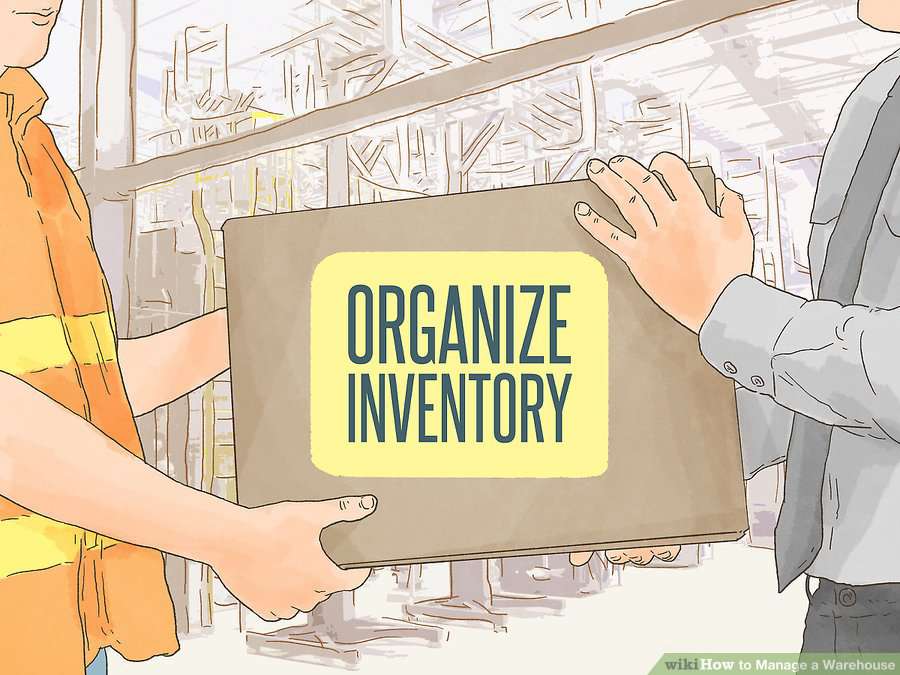 2. Choose products more effectively. Picking or collecting products into shipments can take up a large amount of a worker’s time. However, you can make changes to your selection process to speed it up. For example, if you regularly send large orders to a few key customers, organize your list so that similar items are grouped together. For smaller orders for a large number of customers, you can set it up so that the picklists are grouped, and the actual products are split at a later stage.
- Imagine that your computer warehouse regularly ships small quantities of power cords to a large number of electronics stores. Try organizing your pick list so that all wires are taken from the power cord aisle at one time and then isolated before shipping. This will avoid having pickers walking back and forth all day.
- Some managers choose to implement a color-coding system on pick lists that can organize items by warehouse area or by customer priority, with certain colors indicating high-volume customers.

3.Set up an inventory management system. Ideally any movement of an item should be recorded with all relevant information, including time, product condition, and product code. An efficient management system can be implemented through the use of RFID (radio frequency identification) tags or barcodes attached to inventory management software programs. Make sure all your staff are thoroughly trained in the use of this system.
- In some cases, this system will have to comply with general company policy. Be sure to learn this policy so you can accurately implement it in your warehouse operations.
4. Check storage areas regularly. Walk around and ensure storage areas are kept neat and stocked with appropriate products.
- Use only designated areas for storage of goods. Make some staff clearly mark these areas and only store specific items according to the signs.
- Check pallets for defects and ensure that employees know how to properly handle pallets to ensure stability.
- Record the date of inspection and any damage you find. Begin the process of repairing or removing items if necessary.
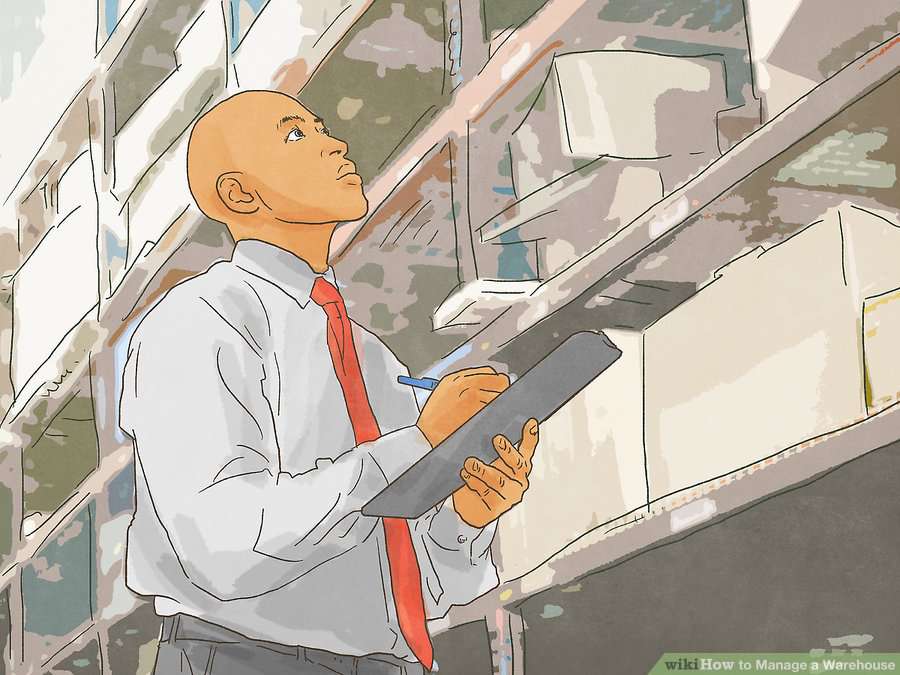 5. Meet regularly with key staff . Hold monthly or weekly meetings with key senior staff, including warehouse, inventory, and purchasing managers and supervisors.
- Discuss new ideas, improved procedures, equipment replacements, budgets, employee promotions, recommendations, and all other work-related topics.
- Ask questions regarding damaged goods or to purchase concerns about the supplier, price, quality or availability of goods
 6. Make changes as needed. To keep your warehouse running smoothly, you may have to make changes to your product storage or product shipping processes. Take the time every six months to evaluate your storage areas.

Part 4: Review shipping and picking operations
1. Coordinate trucks and drivers to transport goods to and from the warehouse to help operations run smoothly . Coordination between arriving and departing trucks helps to make efficient use of the loading dock. It becomes easier if you use a specially designed software package. This does not mean purchasing a full service plan right away. You should find a program that only handles shipping and shipping coordination. Try a program for free before you buy it.
- Coordinating loading and unloading means properly scheduling trucks in such a way that they will not have to wait while other trucks are being loaded or unloaded. Make sure your dock is in constant use and there are not more trucks present than available space.
- You should also focus on limiting the destinations so that your unloading team has enough time to clear and organize the items before heading elsewhere. If they arrive any faster, it creates a “bottleneck” that leads to costly inefficiencies, not to mention stress and frustration.
 2. Arrange staff schedules to have enough people to load and unload. This may require planning for additional staffing on large shipments.
 3. Organize your receiving process in the warehouse. Assign sufficient inspectors and receivers to each shift to compare invoices with received goods and to check the condition of goods upon arrival. Make sure your staff knows what to do with damaged shipments. Ensure that received products are promptly stacked to avoid discrepancies between received shipments and what is on the shelves.
- Give your receiving team enough space to work. This ensures that recently received products are not mixed with existing products.

4. Quality control of goods. Carry out control to check product quality before leaving the warehouse . Organize a system so that defective or out-of-spec items are inspected and removed from the shipment before it leaves the warehouse. This can help avoid loss due to returned goods.
- Put an experienced staff in charge of quality control. Their experience can save you a significant amount of money.
 5. Track your shipment. Your customers will want to know exactly where their products are and when they will arrive. This will also help you quickly resolve missing packages. Be sure to track your shipment with any shipping service you use and regularly check the accuracy of the tracking.

Ducanh collected and translated
Source: Wikihow.com
—> *ASK FOR BASIC SHELVES PRICE QUOTE*
—> *ASK FOR DETAILED PALLET RACK QUOTE*
Guide to effective warehouse management methods
For more details, please contact us directly via address, email or phone.
Hotline:
0903 422179 (Mr. Dat)
0903 412296 (Mr. Hien)
0903 434374 (Mr. Cam)
E-mail: contact@giakelongquyen.com
contact@longquyen.com
Office : 79 Dao Tan St., Giang Vo Ward, Hanoi, Vietnam 84-24-37260098; Fax: 84-24-32115955
Factory: 1085 Phuc Dien St., Xuan Phuong Ward, Ha Noi, Vietnam
84-4-37643527; Fax: 84-4-37643767


