
20 QUESTIONS AND ANSWERS ABOUT PALLET RACK INSTALLATION
1. What are the main parts of a pallet racking system?
Pallet racking system includes main components:
- Upright Frame : The main load-bearing steel structure is made of high quality steel.
- Beam : Pallet support bar designed to withstand heavy loads
- Base Plate : The part that contacts the ground and distributes force to the floor.
- Bracing : Increases stability for the entire system
- Connector : Connects components
Safety Note: Carefully check welds and frame stiffness before installation.

2. Procedure for checking the ground before installing pallet racks?
Testing steps:
- Measure the flatness of the floor using Level Meter
- Check the load-bearing capacity of the foundation with Load Test
- Locate underground pipes and technical infrastructure
- Mark the installation location according to the drawing
- Check safe distances from walls and other equipment
Safety Note: Make sure the ground surface meets the standards for flatness and load bearing.
3. How to ensure the shelf is installed upright?
Alignment procedure:
- Use a Plumb Bob to check verticality.
- Use Spirit Level to measure 90 degree angles
- Adjust the base plate with shims
- Check tilt in both directions
- Tighten the anchor bolts after alignment.
Safety Note: Maximum allowable incline is 1/500.
4. Steps for safe beam installation?
Installation process:
- Check the status of the Safety Pin
- Make sure the Beam Connector is not deformed
- Attach beams to frame at design height
- Install safety pins at all connection points
- Check the level of the beam
Safety Note: Never leave the safety pin unattached.
5. What tools are needed for pallet rack installation?
List of main tools:
- Torque Wrench : To tighten bolts with the correct force
- Impact Drill (Hammer Drill): Drill anchor holes
- Level Tool : Measure straightness
- Measuring Tape : Measure distance
- Safety Equipment: Hat, gloves, shoes
Safety Note: Check the condition of the tool before use.
6. Why is it necessary to check the floor load before installation?
- Floor Load Capacity determines:
- Safety of the entire system
- Ability to distribute force to the foundation
- Lifespan of the project Inspection process:
- Surface hardness measurement
- Compressive strength test
- Determine point load capacity
Safety Note: Always have a safety factor of 1.5 for design loads.
7. How to protect the column foot from forklift impact?
Protective measures:
- Column Guard Installation:
- Made from special thick steel
- Minimum height 400mm
- Using Impact Barrier :
- 45 degree angle installation
- Easily recognizable yellow-black color
Safety Note: Periodically check the condition of protective devices.
8. Procedure for anchoring bolts into concrete floors?
Steps to follow:
- Mark the location according to the drawing
- Drilling holes with Hammer Drill :
- Diameter suitable for bolt
- Depth according to technical requirements
- Cleaning the borehole
- Anchor Bolt Installation
- Tighten with standard force
Safety Note: Ensure minimum distance between drill holes.
9. What are the common types of damage to cross beams?
Common types of damage:
- Beam Deflection :
- Due to overload
- Uneven load distribution
- Connection Damage :
- Connector distortion
- Cracks in the weld
- Surface Damage :
- Scratched protective paint
- Environmental corrosion
Safety Note: Check periodically and replace when damaged.
10. How to calculate the safe distance between shelves?
Calculation formula:
- Aisle Width =
- Forklift Width + 2x(Safety Clearance)
- Minimum 3.3m for standard forklift
- Factors to consider:
- Type of forklift used
- Turning radius of the vehicle
- Pallet size
Safety Note: Ensure sufficient space for forklift to operate safely.

11. What are the lighting requirements for warehouses using pallet racks?
Lighting standards:
- Lighting Level :
- Main aisle : 200 lux
- Working area : 300 lux
- Light position:
- In line with the aisle
- Avoid shadows from shelves
- Lamp type:
- LED High Bay (LED factory lights)
- Highly durable
Safety Note: Ensure even lighting to avoid accidents.
12. Daily safety check procedure for pallet racking?
Checklist:
- Visual Inspection :
- Signs of impact
- Column straightness
- Load Check :
- Distribution of goods
- Allowable weight
- Safety Device (Safety Device):
- Safety pin
- Protective plate
Safety Note: Make a record of the inspection and report immediately if any abnormalities are detected.
13. How to handle when detecting tilted shelves?
Processing procedure:
- Evacuate the area immediately
- Load Removal :
- In order from top to bottom
- Use the right forklift
- Check the cause:
- Nail base
- Frame structure
- Make adjustments:
- Realign the straightness
- Foundation reinforcement
Safety Note: Do not continue to use until repairs are complete.
14. What are the requirements for periodic maintenance of pallet racking systems?
Maintenance schedule:
- Weekly:
- Visual inspection
- Surface cleaning
- Monthly:
- Measure column straightness
- Check anchor bolts
- Annual:
- Load Test
- Weld inspection
Safety Note: Keep complete maintenance records.
15. How to determine the maximum load for each shelf level?
Calculation factors:
- Beam Capacity :
- Beam length
- Beam cross section
- Frame Capacity :
- Frame height
- Number of shelves
- Safety factor:
- Safety factor 1.5
- Dynamic loading during loading and unloading
Safety Note: Always label each floor with the load capacity.
16. Bracing installation process for pallet racks?
Steps to follow:
- Cross Bracing :
- Measure angle exactly 45 degrees
- Install from bottom to top
- Horizontal Bracing :
- Ensures perfect horizontality
- Tighten the bolt with standard force
- Check after installation:
- Tie rod tension
- Links
Safety Note: Do not omit any design braces.
17. What are the requirements for safe distance from shelves to walls?
Distance standards:
- Back Clearance :
- Minimum 150mm if no pallet overhang
- Minimum 300mm if there is a protruding pallet
- Side Clearance :
- Minimum 200mm to wall
- 500mm at the exit location
Safety Note: Ensure space for maintenance and fire protection.
18. How to protect the shelving system in humid environments?
Protection measures:
- Surface Treatment :
- Special anti-rust paint
- High quality zinc coating
- Preventive maintenance:
- Check periodically for signs of corrosion.
- Regular cleaning
- Environmental control:
- Ventilation system installation
- Humidity control
Safety Note: Immediately replace parts showing signs of corrosion.
19. What is the procedure when detecting damage due to impact?
Processing steps:
- Damage assessment:
- Take pictures of the current situation
- Deformation measurement
- Damage Classification :
- Light : Can continue to use
- Average : Needs repair
- Heavy : Must be replaced
- Corrective action:
- Moving goods
- Replace or repair
Safety Note: Immediately stop using damaged area.
20. How to arrange safety signs for pallet racking systems?
Signage requirements:
- Load Signs :
- Place in a visible location
- Big enough size
- Warning Signs :
- Safety Operating Instructions
- Forklift speed regulations
- Installation location:
- At the top of each shelf
- Import and export area
- Technical requirements:
- Environmentally friendly materials
- Contrasting colors
Safety Note: Regularly check and replace faded or damaged signs.
20 QUESTIONS AND ANSWERS ABOUT INDUSTRIAL FLOOR INSTALLATION (STORAGE MEZZANINE)
1. What is Storage Mezzanine and what are its advantages?
Storage Mezzanine (Industrial Floor) is:
- Intermediate floor system utilizes height
- Increase usable area by 2-3 times Main advantages:
- Optimizing space by height
- Modular Design (Modular Design) easy to install
- Flexible in adjusting layout
- Lower cost of building additional floors
Safety Note: It is necessary to calculate the load-bearing capacity of the factory floor.

2. What are the main components of the Storage Mezzanine system?
Basic ingredients:
- Main Beam (Main Beam):
- Main bearing of the system
- Usually use I or H shaped steel
- Secondary Beam :
- Floor support
- Even load distribution
- Column :
- Transmit force to foundation
- With Base Plate to distribute force
Safety Note: Check the quality of welds and bolts.
3. Survey process before installing Mezzanine?
Survey steps:
- Background check:
- Concrete strength
- Floor flatness
- Space measurement:
- Overall height
- Space for equipment
- Locate:
- Technical pipeline
- Fire protection system
Safety Note: Make detailed drawings of collision avoidance points.
4. Requirements for protective railings for Mezzanine?
Specifications:
- Handrail Height :
- Minimum 1100mm
- Equally spaced middle bar
- Kick Plate :
- Height 150mm
- Fall protection
- Vertical bar spacing:
- Maximum 200mm
- Horizontal load 0.75kN/m
Safety Note: Check for tightness periodically.
5. What types of floors are commonly used for Mezzanine?
Floor classification:
- Steel Grating (Steel floor panels):
- Airy and light
- Good anti- slip
- Checkered Plate :
- High load capacity
- Anti-slip surface
- Timber Decking (Laminate flooring):
- Noise reduction
- High aesthetics
Safety Note: Choose the type appropriate to the environment in which it is used.
6. What is the procedure for installing columns for Mezzanine?
Steps to follow:
- Column positioning:
- Mark column center
- Check the distance
- Installing the base plate:
- Precision anchor drilling
- Anti-vibration rubber pad
- Erecting columns:
- Check verticality
- Temporary welding for positioning
Safety Note: Make sure the pole is completely vertical.
7. How to calculate the load for Mezzanine?
Load types:
- Dead Load (Static Load):
- Structural weight
- Fixed equipment
- Live Load :
- People and goods
- Mobile Devices
- Safety factor:
- 1.5 for static load
- 2.0 for dynamic load
Safety Note: Always have a load limit sign posted.
8. Staircase requirements for Mezzanine?
Standard specifications:
- Stair Width :
- Minimum 1000mm
- Optimum 1200mm
- Step Height :
- 150-170mm
- Equal
- Tread Depth :
- 250-300mm
- With anti-slip strip
Safety Note: Install railings on both sides of stairs.
9. How to protect Mezzanine columns from impact?
Protection measures:
- Column Guard :
- Height 400mm
- Steel thickness 3-5mm
- Installation location:
- Easy to collide angle
- Near forklift aisle
- Color:
- Yellow-black easy to recognize
- Reflective paint
Safety Note: Periodically check the condition of protective equipment.
10. Mezzanine periodic inspection process?
Test content:
- Weekly:
- Welds and bolts
- Abnormal vibration
- Monthly:
- Beam deflection
- Column deformation
- Annual:
- NDT weld inspection
- Tighten all bolts
Safety Note: Keep complete inspection records.

11. Is fire protection system required for Mezzanine?
Fire safety requirements:
- Sprinkler System :
- Two-storey independent layout
- Standard nozzle spacing
- Fire Exit :
- Minimum 2 entrances per floor
- Light-up signs
- Fire fighting equipment:
- Fire extinguishers of all kinds
- Fire hydrant
Safety Note: Make sure the exit is clear.
12. Lighting requirements for Mezzanine?
Lighting standards:
- Upper floor:
- Brightness 300 lux
- Industrial LED lights
- Downstairs:
- Brightness 200 lux
- Avoid the dark
- Stair:
- Emergency light
- Fluorescent signs
Safety Note: Provide backup lighting in case of power failure.
13. How to minimize vibration for Mezzanine?
Anti-vibration solution:
- Vibration Damper :
- Mounted at the base of the column
- Special rubber pad
- Structural reinforcement:
- Add a brace
- Increase beam stiffness
- Terms of use:
- Limit device vibration
- Control the speed of movement
Safety Note: Check vibration periodically.
14. How to handle when discovering sagging floor?
Processing procedure:
- Condition Assessment:
- Accurate deflection measurement
- Identify the cause
- Remedy:
- Load relocation
- Secondary beam reinforcement
- Prevent:
- Load control
- Reasonable arrangement of goods
Safety Note: Discontinue use of sagging area.
15. Electrical system requirements for Mezzanine?
Installation standards:
- Power Distribution:
- Separate two floors
- Easy to maintain
- Power outlet:
- IP65 waterproof
- With protective cover
- Conductor:
- Go in the protective tube
- Safe grounding
Safety Note: Check electricity every 6 months.
16. What are the signage requirements for Mezzanine?
Sign location:
- Stair:
- Allowable load
- Escape route
- Working area:
- Safety regulations
- No smoking
- Entrance:
- Clear height
- Forklift speed
Safety Note: Signs must be clear and easy to read.
17. Procedure for repairing cracked welds?
Steps to follow:
- Weld inspection:
- Use osmotic solution
- Determine the crack length
- Repair:
- Clean the crack
- Overlay welding
- Check after repair:
- NDT Testing
- Quality Assessment
Safety Note: Only qualified personnel may weld.
18. How to expand an existing Mezzanine?
Extension process:
- Current status assessment:
- Load capacity
- Available Space
- Expandable design:
- Structural calculation
- Drawing detailed drawings
- Construction:
- Foundation reinforcement
- New structural connection
Safety Note: Make sure the old-new texture is consistent.
19. What are the regular maintenance requirements for Mezzanine?
Maintenance schedule:
- Daily:
- Visual inspection
- Floor cleaning
- Weekly:
- Check bolts
- Check the railing
- Monthly:
- Deflection measurement
- Weld inspection
Safety Note: Keep complete maintenance logs.
20. Regulations on transporting goods to Mezzanine?
Shipping process:
- Using the device:
- Suitable forklift
- Goods elevator
- General provisions:
- Do not exceed the load capacity.
- Adhere to the roadmap
- Safe:
- Supervised
- Use standard pallets
Safety Note: Train employees in safe shipping procedures.
20 QUESTIONS AND ANSWERS ABOUT MOBILE SHELVING INSTALLATION
1. What is Mobile Shelving and what are its advantages?
Mobile Shelving includes:
- Mobile rail mounted shelf system
- Hand crank or electric operation Main advantages:
- Save space 40-50%
- Better protection of goods
- Increase storage capacity
- Flexible in use
Safety Note: Make sure the floor is flat and can bear the load well.

2. What are the main components of a Mobile Shelving system?
Structure includes:
- Track System :
- Guide rail
- Load bearing rail
- Mobile Base :
- Special wheels
- Electric motor (if any)
- Shelving Unit :
- Bearing frame
- Cargo compartment
Safety Note: Check the system balance.
3. Installation process for Mobile Shelving rails?
Steps to follow:
- Floor preparation:
- Mark location
- Check flatness
- Rail installation:
- Alignment
- Firmly fixed
- Check:
- Measure parallelism
- Slip test
Safety Note: The rail must be perfectly aligned.
4. How to calculate the required clearance?
Calculation method:
- Required Space :
- Cabinet width
- Minimum path
- Clearance :
- Between modules
- With walls and obstacles
- Access Aisle (Entrance):
- Minimum width
- Clear height
Safety Note: Ensure adequate space for operation.
5. What are the types of control mechanisms for Mobile Shelving?
Classify:
- Manual Drive:
- Mechanical crank
- Suitable transmission ratio
- Electric Drive:
- Control buttons
- Safety sensor
- Remote Control:
- Wireless
- Has security code
Safety Note: Equipped with emergency stop button.
6. Requirements for rail system maintenance?
Maintenance procedure:
- Cleaning the rails:
- Sweep away dirt
- Periodic oiling
- Check:
- Surface wear
- Cracks or deformations
- Maintenance:
- Periodic lubrication
- Tighten the bolts
Safety Note: Keep a maintenance log.
7. How to handle when the system is stuck?
Processing procedure:
- Check the cause:
- Obstacles on the rails
- Broken wheel
- Remedy:
- Clear the obstructions
- Repair or replace
- Prevent:
- Periodic check
- Regular cleaning
Safety Note: Do not attempt to move if stuck.
8. Electrical system requirements for Mobile Shelving?
Electrical standards:
- Power Supply :
- Voltage stabilizer
- Have backup power
- Conductor:
- Fireproof
- Go in the protective tube
- Protective equipment:
- CB overload
- RCD anti-shock
Safety Note: Check electricity periodically.
9. What safety features are required?
Safety requirements:
- Safety Sensors :
- Obstacle Detection
- Auto stop
- Emergency Stop :
- Red button
- Visible location
- Warning System :
- Alarm light
- Warning siren
Safety Note: Test security system weekly.
10. User training process?
Training content:
- Basic operation:
- Moving Process
- Load limit
- Safe:
- Emergency situation
- Precautions
- Maintenance:
- Daily Check
- Report a problem
Safety Note: Update knowledge periodically.

11. How to optimize product placement on Mobile Shelving?
Arrangement principles:
- Product classification:
- By frequency of use
- By weight
- Location layout:
- Heavy goods for lower floor
- Easy access for common goods
- Load Distribution :
- Balance on both sides
- Do not exceed the allowable load
Safety Note: Clearly mark the location of goods.
12. What are the lighting requirements for Mobile Shelving systems?
Lighting standards:
- General Lighting :
- Brightness 200-300 lux
- Even light
- Task Lighting (Local Lighting):
- LED strip light
- Mounted on each module
- Emergency Lighting :
- Automatic when power failure
- Bright enough to escape
Safety Note: Check lighting system periodically.
13. What is the procedure for periodic inspection of the wheel system?
Testing steps:
- Surface test:
- Wheel wear
- Crack or break
- Performance Evaluation:
- Smoothness when rotating
- Unusual noise
- Maintenance:
- Bearing lubrication
- Surface cleaning
Safety Note: Replace wheel when worn over 20%.
14. How to ensure safety during a power outage?
Emergency solution:
- Manual Override :
- Conversion mechanism
- Spare crank
- Emergency Power (Backup Power):
- UPS for system
- Emergency light
- Escape procedure:
- Illuminated Sign
- Clear exit
Safety Note: Conduct regular emergency drills.
15. Fire protection measures for Mobile Shelving?
Fire protection system:
- Fire Detection :
- Smoke detector
- Temperature sensor
- Fire Suppression :
- Sprinkler system
- Portable fire extinguisher
- Fire prevention regulations:
- No smoking
- Separate combustible materials
Safety Note: Do not store flammable materials in the warehouse.
16. How to handle when the control system fails?
Processing procedure:
- Initial check:
- Power supply
- Protective fuse
- Error diagnosis:
- Error code displayed
- Warning sound
- Fix:
- Switch to manual mode
- Call technical expertise
Safety Note: Do not attempt to repair electrical systems yourself.
17. What are the safety distance requirements between modules?
Specifications:
- Side Clearance :
- Minimum 20mm
- Both sides
- End Clearance :
- 50mm to wall
- 100mm with obstruction
- Operating Aisle :
- Minimum 900mm width
- No obstructions
Safety Note: Mark safe areas on the floor.
18. What are the load regulations for Mobile Shelving?
Load types:
- Shelf Load :
- 100-200kg per layer
- Even distribution
- Module Load :
- Total allowable load
- Safety factor 1.5
- Floor Load :
- Calculate the pressure on the rail
- Load capacity test
Safety Note: Post clear load signs.
19. How to reduce operating noise?
Noise reduction measures:
- Periodic maintenance:
- Lubricate the parts
- Check chain tension
- Speed adjustment:
- Slow down the start
- Smooth when stopping
- Noise reduction materials:
- Rubber wheel cushion
- Anti-vibration pads
Safety Note: Check for unusual sounds.
20. Regular cleaning and maintenance procedures?
Maintenance schedule:
- Daily:
- Clean the rails
- Check the operation
- Weekly:
- Clean thoroughly
- Check bolts
- Monthly:
- Full lubrication
- Test security system
Safety Note: Keep complete maintenance logs.
20 QUESTIONS AND ANSWERS ABOUT INSTALLING RIVET BOLTLESS SHELVING
1. What is Rivet Boltless Shelving and what are its outstanding features?
Rivet Boltless Shelving includes:
- Bolt-free assembled shelving system
- Use rivets to connect Main features:
- Easy to install and remove
- Flexible in adjustment
- Good bearing capacity
- Save installation time
Safety Note: Check connection points carefully.

2. What are the main components of the system?
Structure includes:
- Upright Post :
- Pre-punched
- Force-bearing form
- Shelf Level :
- Order tray
- Cross support
- Rivet Clips :
- Connecting the parts
- Safety pin
Safety Note: Make sure all clamps are properly installed.
3. Standard installation process?
Installation steps:
- Prepare:
- Arrange components
- Full Check
- Frame installation:
- Erect vertical column
- Attach the crossbar
- Complete:
- Install shelves
- Check for firmness
Safety Note: Follow installation sequence.

4. How to calculate the load for each floor?
Calculation method:
- Bay Load (Load per floor):
- Usable area
- Shelf material
- Support Capacity :
- Number of fulcrum points
- Distance between pillars
- Safety Factor :
- Apply factor 1.5
- Load distribution calculation
Safety Note: Do not exceed the allowable load.
5. Requirements for distance between floors?
Distance standards:
- Minimum height:
- 300mm for light goods
- 450mm for medium row
- Adjust:
- In 25mm or 50mm steps
- Suitable for goods
- Usable space:
- Easy to pick up
- Safe to operate
Safety Note: Make sure there is enough working space.
6. Measures to increase stability?
Reinforcement method:
- Cross Bracing :
- X-shaped installation
- Increase hardness
- Wall Fixing:
- Use anchor bowl
- Anti-tilt
- Base Plates :
- Distribute force to the floor
- Adjust the straightness
Safety Note: Check for tightness after reinforcement.
7. How to handle when detecting loose clamp?
Processing procedure:
- Check the cause:
- Clamp wear
- Abnormal impact force
- Fix:
- Replace new clamp
- Tighten up
- Prevent:
- Periodic check
- No overload
Safety Note: Do not use damaged clamps.
8. What are the floor requirements for installation?
Floor standards:
- Floor Level (Flatness):
- Error <5mm/3m
- No concave or convex
- Load Bearing :
- Suitable for total load
- No cracking or sagging
- Surface :
- Clean
- Dry
Safety Note: Check the quality of the floor carefully before installation.
9. Regular maintenance procedure?
Maintenance schedule:
- Weekly:
- Check the rivet clamp
- Surface cleaning
- Monthly:
- Measure straightness
- Check the connection
- Annual:
- Comprehensive review
- Replace worn parts
Safety Note: Keep complete maintenance logs.
10. Safety standards when using?
Safety regulations:
- Load Distribution :
- All on the shelf
- Don’t focus on one point
- Access Safety :
- Use the appropriate ladder
- No climbing on shelves
- Inspection :
- Daily before use
- Report problems immediately
Safety Note: Train employees on safety rules.
11. How to increase space efficiency?
Optimal solution:
- Vertical-horizontal layout:
- Calculate maximum height
- Optimize the distance between shelves
- Bay Configuration :
- Flexible height adjustment
- Special accessory integration
- Take advantage of the corner:
- Install L-shaped shelves
- Use dead space
Safety Note: Make sure the aisle is wide enough.
12. What types of additional accessories are available for the shelves?
Main accessories:
- Dividers :
- Space division
- Organize goods
- Label Holders :
- Product identification
- Easy to search
- Back Stops :
- Rear fall prevention
- Increased safety
Safety Note: Install accessories properly.
13. Safe shelf moving procedure?
Steps to move:
- Prepare:
- Clear the goods
- Mark new location
- Dismantling:
- Reverse order of installation
- Component Classification
- Reassemble:
- Check component status
- Follow standard procedures
Safety Note: Do not remove multiple shelves at once.
14. How to handle when the shelf tray is deformed?
Processing procedure:
- Condition Assessment:
- Degree of deformation
- Causes
- Measure:
- Replace if severe
- Reinforce if light
- Prevent:
- Load control
- Even distribution of goods
Safety Note: Do not use deformed rims.
15. Lighting requirements for shelf area?
Lighting standards:
- General Lighting :
- 200 lux minimum
- High uniformity
- Task Lighting (Local Lighting):
- 300 lux for work area
- Avoid shadows
- Emergency Lighting :
- Guaranteed escape
- 24/7 Operation
Safety Note: Check the light bulb regularly.

16. Criteria for choosing shelf materials?
Material requirements:
- Strength :
- Good load bearing
- No deformation
- Surface :
- Smooth without sharp edges
- Anti-slip
- Durability :
- Anti-corrosion
- Easy to clean
Safety Note: Choose environmentally friendly materials.
17. Regulations on safe distance for fire prevention?
Fire safety requirements:
- Sprinkler Clearance :
- 450mm from nozzle
- No Obscuration
- Access Path :
- Minimum 750mm width
- Ventilated
- Fire Equipment :
- Easy to access
- There is a sign
Safety Note: Comply with local fire safety regulations.
18. How to deal with rust on shelves?
Processing procedure:
- Evaluate:
- Rust level
- Location of influence
- Handle:
- Clean rust
- Anti-rust paint
- Prevent:
- Humidity control
- Regular maintenance
Safety Note: Replace if rust is severe.
19. Regulations on safety signs?
Signage requirements:
- Load Signs :
- Clear and easy to read
- Place in a visible location
- Warning Signs :
- User manual
- Hazard warning
- Location :
- Each shelf
- Work area
Safety Note: Replace faded or damaged signs.
20. Instructions for safe shelf removal?
Dismantling process:
- Prepare:
- Moving goods
- Prepare tools
- Order:
- Remove the front shelf
- Remove the crossbar
- Remove the vertical column
- Preserve:
- Component Classification
- Mark for reinstallation
Safety Note: Do not remove multiple locations at the same time.
20 QUESTIONS AND ANSWERS ABOUT INSTALLING CANTILEVER RACK
1. What is Cantilever Rack and its main application?
Cantilever Rack includes:
- Shelving system with one side support
- Designed to accommodate long and bulky items Main applications:
- Storage of steel pipes, wood
- Construction materials warehouse
- Contains metal plates
- Preservation of plastic and aluminum bars
Safety Note: Make sure the foundation is solid.
2. What are the main components of Cantilever racks?
Structure includes:
- Column (Vertical column):
- Main bearing
- With arm mounting slot
- Arms :
- Cargo handling
- Height adjustable
- Base :
- Distribute force to the ground
- Increased stability
Safety Note: Check the strength of the connection.

3. Foundation requirements for Cantilever racks?
Foundation standards:
- Foundation Strength :
- Load capacity >2000kg/m2
- High grade concrete
- Specifications:
- Suitable depth
- Qualified steel
- Surface treatment:
- Absolutely flat
- Good waterproofing
Safety Note: Check the soil before construction.
4. How to calculate the load for the arm?
Calculation method:
- Arm Load :
- Arm length
- Weight of goods
- Deflection :
- L/200 limit
- Check for deformation
- Safety factor:
- 1.5 for static load
- 2.0 for dynamic loading
Safety Note: Do not exceed design load.
5. Main column installation process?
Steps to follow:
- Positioning:
- Mark column center
- Check the distance
- Installation:
- Vertical alignment
- Tighten the anchor bolts
- Check:
- Firmness
- Align with another column
Safety Note: Use suitable lifting equipment.
6. Requirements for column spacing?
Distance standards:
- Bay Spacing :
- Depends on length of goods
- Optimize load capacity
- Height :
- As per usage requirement
- Ensure stability
- Access :
- Wide enough for forklift
- Convenient operation
Safety Note: Calculate carefully before installation.
7. Measures to reinforce against collapse?
Reinforcement method:
- Cross Bracing :
- X-shaped installation
- Increase hardness
- Anchor Bolts :
- Size fits all
- Depth qualified
- Base Plates :
- Big enough size
- Good force distribution
Safety Note: Periodically check for tightness.
8. Arm maintenance procedure?
Maintenance schedule:
- Weekly Check:
- Deflection
- Weld
- Monthly maintenance:
- Tighten the bolts
- Check the safety pin
- Annual Review:
- Load test
- Deformation measurement
Safety Note: Keep a complete log.
9. How to avoid forklift collision?
Precautions:
- Column Guards :
- Installed at the base of the column
- Recognizable colors
- Floor Marking :
- Clear lines
- Warning signs
- Operating regulations:
- Speed limit
- Driver training
Safety Note: Remind the operator frequently.
10. Cantilever warehouse lighting requirements?
Lighting standards:
- General Lighting :
- 200 lux minimum
- Even distribution
- Task Lighting (Local Lighting):
- 300 lux working area
- Avoid glare and shadows
- Emergency (Emergency lighting):
- Independent power source
- 24/7 Maintenance
Safety Note: Maintain lighting system regularly.
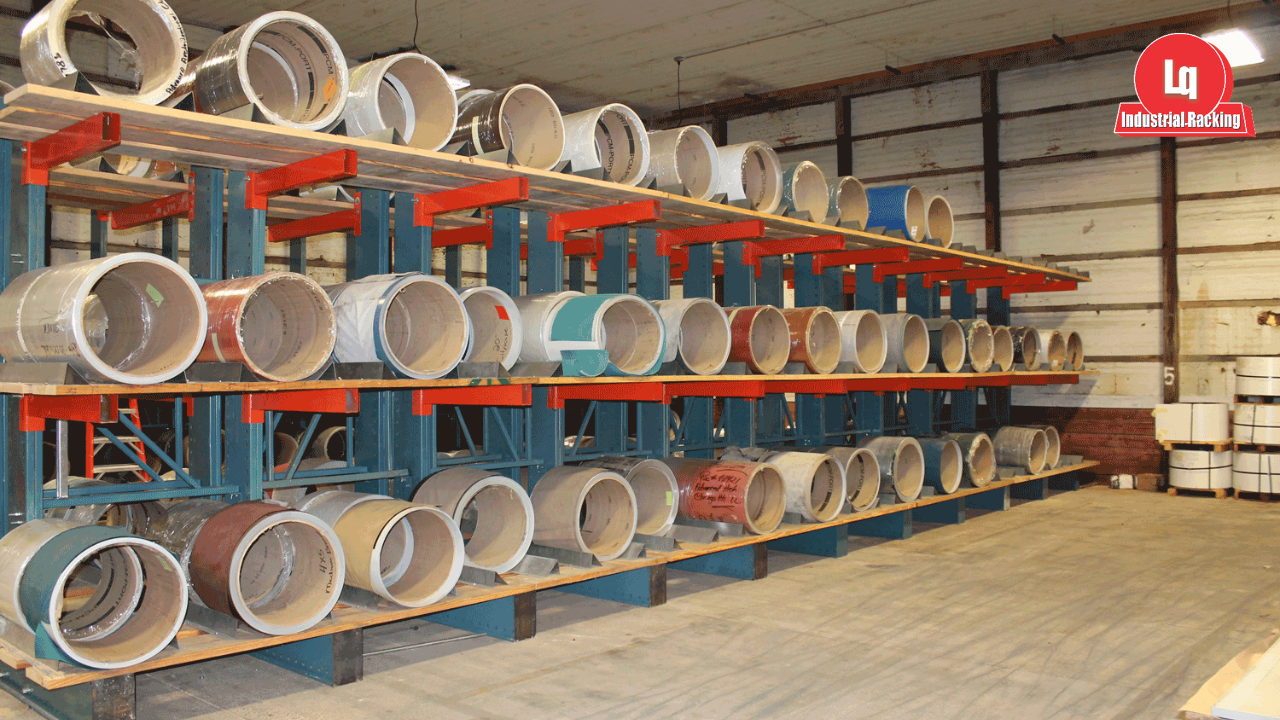
11. What are the types of safety pins for armrests?
Pin classification:
- Safety Pin (Pin):
- High strength steel
- Easy to install and remove
- Locking Device :
- Automatic mechanism
- Anti- rebound
- Technical requirements:
- Suitable diameter
- High durability
Safety Note: Check latch before each shift.
12. Safe loading and unloading procedures?
Steps to follow:
- Prepare:
- Check load
- Evaluate item size
- Operation:
- Line up from inside out
- Keep the balance on both sides
- Complete:
- Check stability
- Record information
Safety Note: Do not exceed the length of the support arm.
13. Safety distance requirements?
Distance standards:
- Aisle Width :
- 1.8m minimum
- Suitable for forklifts
- Height Clearance :
- 500mm top
- Enough for operation
- End Clearance :
- 1000mm to wall
- Convenient to move
Safety Note: Mark the operating area clearly.
14. Anti-corrosion measures for shelves?
Protection method:
- Surface Treatment :
- Hot dip galvanized
- Industrial epoxy paint
- Regular maintenance:
- Check for signs of rust
- Timely processing
- Environment:
- Humidity control
- Good ventilation
Safety Note: Replace severely corroded parts.
15. Regulations on safety signs?
Signage requirements:
- Load Capacity :
- Clear and large
- Place in a visible location
- Operation Guide:
- Standard procedure
- Hazard warning
- Emergency :
- Contact phone number
- First aid instructions
Safety Note: Update signage as changes occur.
16. How to handle when the armrest is deformed?
Processing procedure:
- Evaluate:
- Degree of deformation
- Causes
- Handle:
- Remove the armrest
- Replace if necessary
- Check:
- Test load after replacement
- Ensure straightness
Safety Note: Do not use deformed armrests.

17. Requirements for fire protection equipment?
Fire protection equipment:
- Fire Extinguisher :
- Arrange every 15m
- Suitable type of goods
- Sprinkler System :
- Cover the entire warehouse
- Auto- Activate
- Fire Alarm :
- Automatic system
- Central Connection
Safety Note: Check fire protection equipment periodically.
18. Cantilever rack relocation process?
Relocation steps:
- Prepare:
- Detailed planning
- Clear the goods
- Dismantling:
- Reverse order of installation
- Component marking
- Reinstall:
- Quality control
- Compliance with procedures
Safety Note: Use suitable lifting equipment.
19. Anti-vibration measures for high shelves?
Vibration reduction method:
- Structural Support :
- Add a brace
- Column Stiffening
- Base Reinforcement :
- Extend the base plate
- Increase the number of anchors
- Operation Control:
- Reduce forklift speed
- Dynamic load limitation
Safety Note: Monitor vibration regularly.
20. Requirements for operator training?
Training content:
- Basic knowledge:
- Shelf structure
- Load limit
- Operating skills:
- Loading and unloading operations
- Troubleshooting
- Safe:
- Emergency Procedures
- Use protective equipment
Safety Note: Periodically evaluate employee competency.
20 QUESTIONS AND ANSWERS ABOUT MOLD RACK INSTALLATION
1. What is Mold Rack and its main features?
Mold Rack includes:
- Specialized racking system for molds
- Heavy duty design Key features:
- Solid structure
- Load capacity >2000kg/floor
- Integrated sliding system
- Easy access to mold
Safety Note: Foundation must meet load bearing standards.
2. What are the main components of Mold Rack?
Structure includes:
- Main Frame :
- Load bearing column
- Cross beam
- Sliding System :
- Slide rail
- High quality ball bearings
- Platform :
- Bearing surface
- Auxiliary support bar
Safety Note: Periodically check connection points.

3. Requirements for the slide rail system?
Technical standards:
- Track Material :
- High hardness steel
- Abrasion resistant
- Ball Bearing :
- Good load bearing
- Lubricate regularly
- Installation :
- Perfect balance
- Absolutely parallel
Safety Note: Regularly check for slipperiness.
4. Sliding system maintenance process?
Maintenance schedule:
- Daily:
- Operational Test
- Surface cleaning
- Weekly:
- Bearing lubrication
- Check for play
- Monthly:
- Tighten the bolts
- Wear measurement
Safety Note: Keep complete maintenance logs.
5. How to calculate the distance between shelves?
Calculation method:
- Mold Size :
- Maximum width
- Overall height
- Operation Space:
- Safety clearance
- Path for people
- Equipment Access :
- Forklift moving
- Specialized equipment
Safety Note: Make sure there is enough working space.
6. Requirements for safety locking system?
Lock standard:
- Locking Mechanism :
- Auto lock when stop
- Anti -slip
- Release System :
- Easy to operate
- Absolutely safe
- Maintenance :
- Periodic check
- Replace promptly
Safety Note: Test locking system before each shift.
7. Safe mold loading/unloading process?
Steps to follow:
- Prepare:
- Check lifting equipment
- Weight rating
- Perform:
- Move slowly
- Keep Balance
- Complete:
- Safety lock
- Check location
Safety Note: Always have someone supervise when operating.
8. Anti-rust measures for mold shelves?
Protection method:
- Surface Treatment :
- Galvanized
- Anti-rust paint
- Environment Control :
- Suitable humidity
- Good ventilation
- Regular Maintenance:
- Regular cleaning
- Timely processing
Safety Note: Check periodically for signs of rust.
9. Requirements for lifting equipment for mold shelves?
Equipment standards:
- Lifting Capacity :
- Suitable mold weight
- Safety factor 1.5
- Operation Features :
- Move precisely
- Sensitive control
- Safety Devices :
- Overload warning
- Emergency brake
Safety Note: Check equipment before use.
10. Regulations on safety signs?
Signage requirements:
- Load Information:
- Maximum load
- Allowable size
- Operation Guide:
- Operation process
- Hazard warning
- Emergency Contact:
- Support phone number
- Troubleshooting Procedure
Safety Note: Signs must be clear and easy to read.

11. How does the mold positioning system work?
System structure:
- Positioning Pins :
- Special steel material
- Self-centering mechanism
- Guide System :
- Precision guide groove
- Position sensor
- Lock Mechanism :
- Auto lock position
- Absolutely safe
Safety Note: Check accuracy periodically.
12. What types of safety sensors are needed?
Sensor classification:
- Movement Sensors :
- Obstacle Detection
- Emergency stop
- Load Sensors :
- Overload warning
- Force distribution monitoring
- Position Sensors :
- Determine exact location
- Cruise control
Safety Note: Test sensor before each shift.
13. What is the procedure for fixing a jammed rail?
Processing steps:
- Check the cause:
- Find obstacles
- Damage assessment
- Remedy:
- Clean the slide rail
- Bearing lubrication
- Post-processing inspection:
- Slip test
- Ensure safety
Safety Note: Do not attempt to operate while stuck.
14. Lighting requirements for mold warehouse?
Lighting standards:
- Main Lighting:
- 300 lux minimum
- Uniform lighting
- Task Lighting (Local Lighting):
- 500 lux working area
- Avoid the dark
- Emergency Lighting :
- 24/7 Operation
- Bright enough to move around
Safety Note: Maintain lighting system regularly.
15. Regulations on mold storage?
Storage requirements:
- Environment Control :
- Suitable temperature
- Humidity < 60%
- Protection :
- Dust cover
- Impact Resistant
- Maintenance :
- Regular cleaning
- Surface lubrication
Safety Note: Check the mold condition regularly.
16. How to handle electrical problems?
Processing procedure:
- When power failure:
- Stop operation
- Switch to manual mode
- System check:
- Power supply
- Control circuit
- Restore:
- Test each part
- Ensure safety
Safety Note: Only qualified technicians are allowed to perform electrical repairs.

17. Requirements for mold warehouse ventilation?
Ventilation standards:
- Air Flow :
- Suitable speed
- Even distribution
- Ventilation System :
- High power fan
- Effective dust filtration
- Temperature Control :
- Maintain a stable temperature
- Avoid stagnant water
Safety Note: Check ventilation system periodically.
18. Regulations on personal protective equipment?
Equipment needed:
- Basic PPE (Basic Protection):
- Safety helmet
- Safety shoes
- Task-specific PPE :
- Cut resistant gloves
- Eye protection
- Additional Equipment:
- Seat belt
- Dust mask
Safety Note: Check protection status before use.
19. Mold shelf relocation process?
Steps to follow:
- Prepare:
- Detailed planning
- Clean the mold
- Dismantling:
- In reverse order
- Component marking
- Transport:
- Use the right equipment
- Packed carefully
Safety Note: Supervisors are present throughout the process.
20. Requirements for fire protection system?
Fire protection equipment:
- Fire Detection :
- Automatic smoke detector
- Temperature sensor
- Suppression System :
- Automatic Sprinkler
- Fire extinguishers of all kinds
- Emergency Response :
- Emergency exit
- Safe assembly point
Safety Note: Regular fire drills.
Contact Information
HOT LINE:
0903422179 (Mr. Dat)
0903412296 (Mr. Hien)
0903434374 (Mr. Cam)
EMAILS:
contact@giakelongquyen.com
contact@longquyen.com
OFFICE:
79 Dao Tan St., Giang Vo Ward, Ha Noi, Viet Nam
84-24-37260098; Fax: 84-24-32115955
FACTORY:
1085 Phuc Dien St., Xuan Phuong Ward, Hanoi, Vietnam
84-24-37643527; Fax: 84-24-37643767
[wpforms id=”119062″]


