
1. General Introduction of Pallets
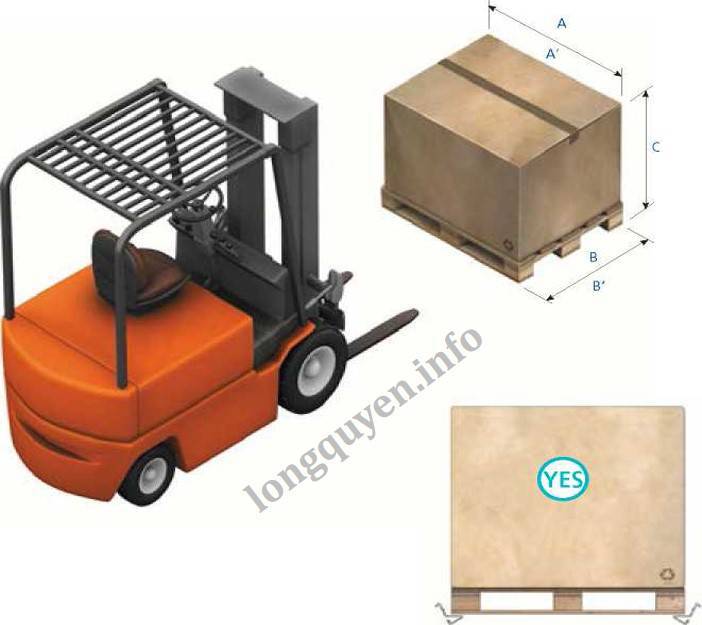
Pallet Classification: A pallet is a flat component, usually made of wood, plastic, or metal, designed to support goods when lifting, moving, and storing by forklifts or other loading and unloading equipment. In the logistics industry, pallets act as standard “transport units”, making it easy for goods to move from one point to another without damage.

2. Benefits of Using Pallets in Logistics
- Increased Storage Efficiency: Arrange goods scientifically, make the most of warehouse shelf space.
- Save time: Shorten the time for loading, unloading, packing and inventorying goods.
- Cargo Protection: Reduce the risk of impact and damage during movement.
- Cost optimization: Reduce manual labor, reduce logistics costs.
- Synchronization: Easily compatible with standard storage shelves.

3. Common Pallet Size Standards
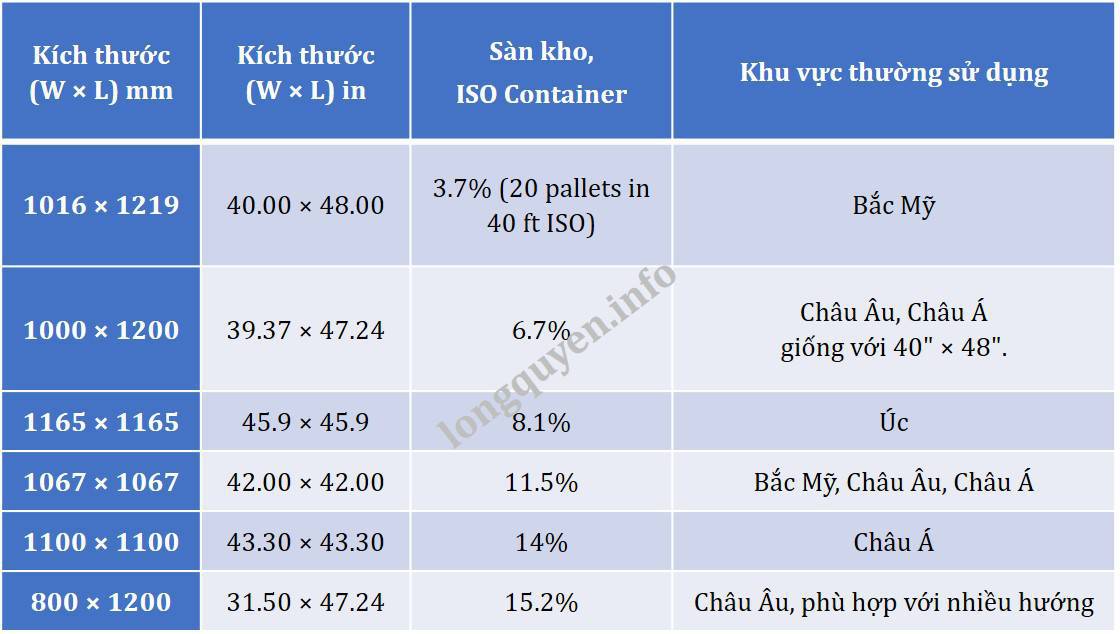
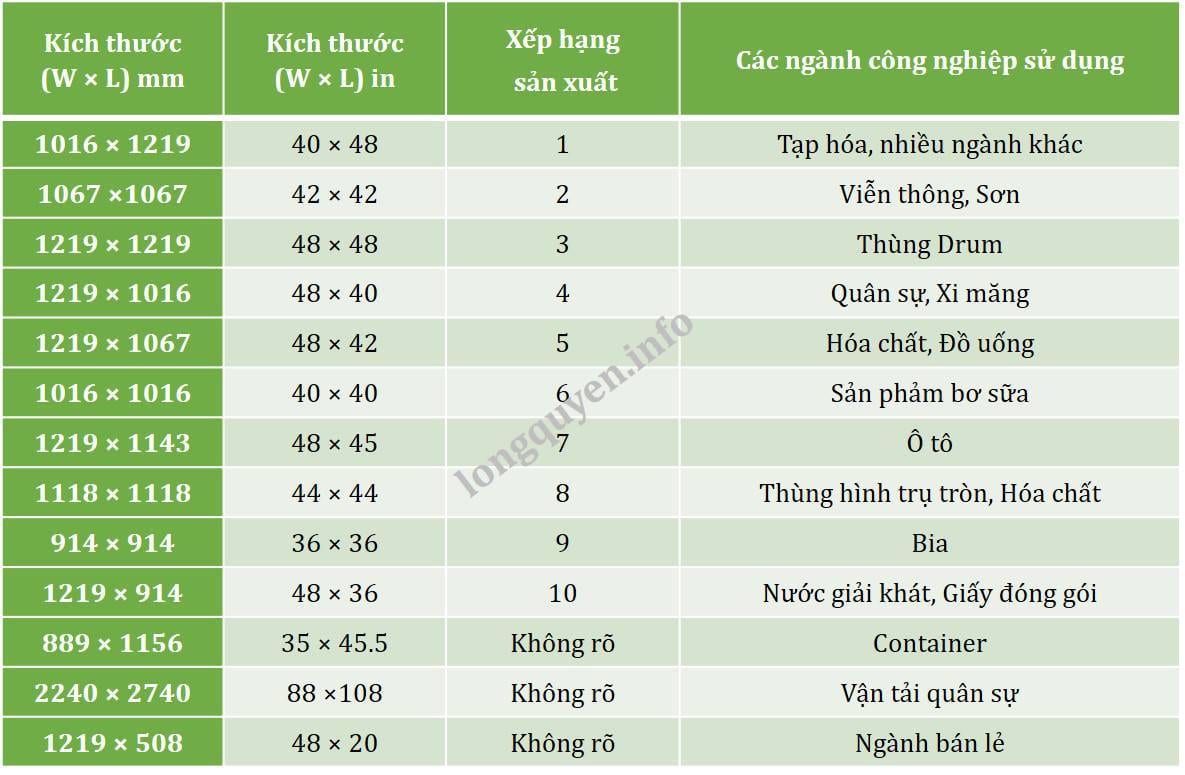
Quick answer: The most common pallet sizes are 1200 × 1000 mm (Asia and Vietnam), 1200 × 800 mm (Euro pallet), 1219 × 1016 mm / 48 × 40 in (North America) and 1100 × 1100 mm (Japan, Korea). One standard pallet is typically loaded to 500–1,500 kg and stacked to about 1,000–1,800 mm high including the pallet.
| Dimensions (mm) | Size (inch) | Main areas of use |
|---|---|---|
| 1200 x 1000 | 47.2 x 39.4 | Asia, Australia |
| 1200 x 800 | 47.2 x 31.5 | Europe (Euro pallet) |
| 1219 x 1016 | 48 x 40 | North America |
| 1100 x 1100 | 43.3 x 43.3 | Japan, South Korea |
| 1140 x 1140 | 44.9 x 44.9 | Container Export |
Note: The choice of pallet size should be in sync with the size of the shelf and the means of transportation.
4. Sorting Pallets by Material
4.1 Wooden pallets
- Advantage: Low cost, easy to produce and repair.
- Shortcoming: Easily damaged, termites, water permeable.
- Application: Dry goods that do not require high hygiene.
4.2 Plastic pallets
- Advantage: Moisture-proof, termite-proof, long service life.
- Shortcoming: The price is higher than wood.
- Application: Food, healthcare, and chemical industries.
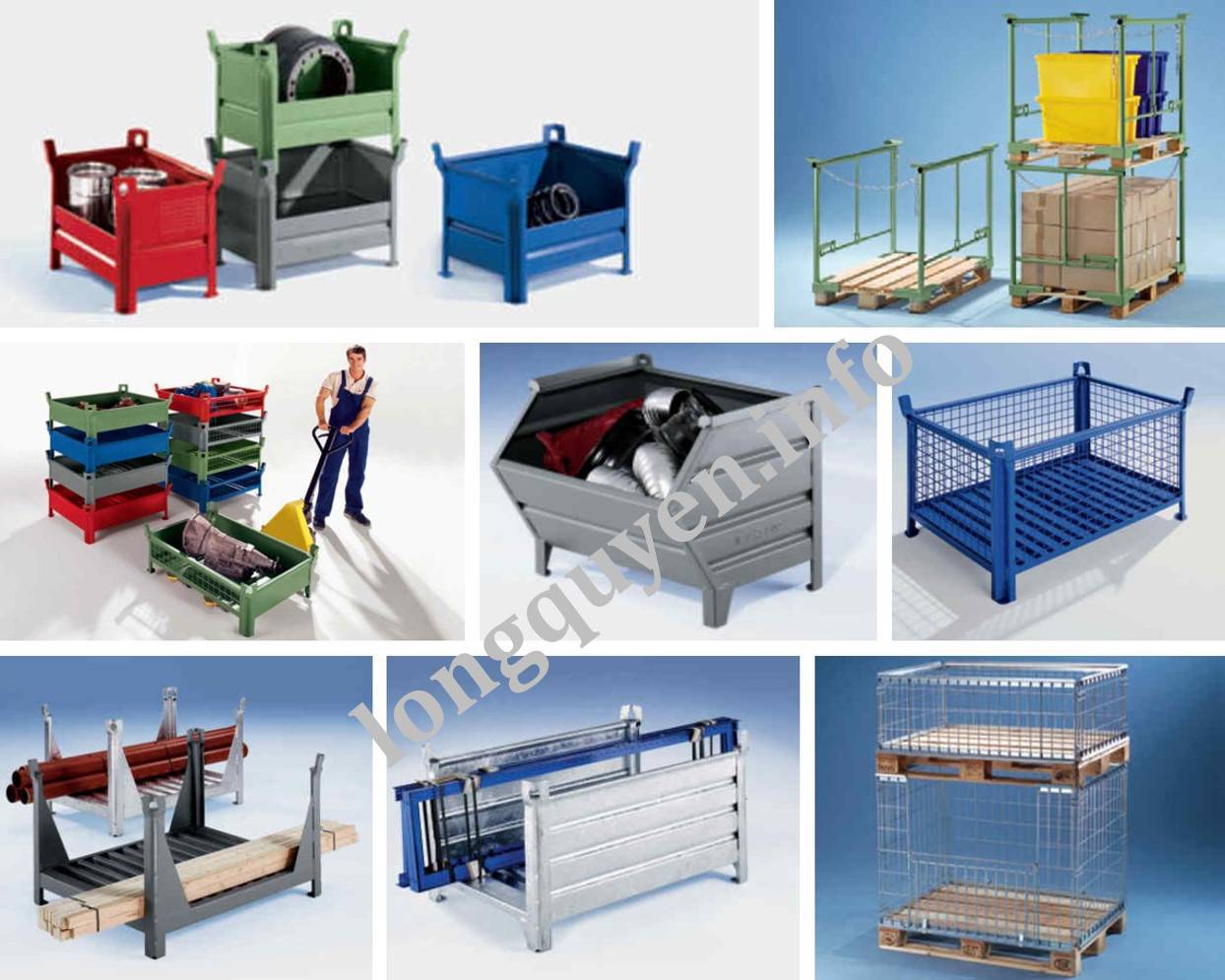
4.3 Metal pallets
- Advantage: Super durable, heavy load, fire retardant.
- Shortcoming: Heavy, high cost.
- Application: Heavy cargo, high temperature environment.

5. Pallet Classification by Structure
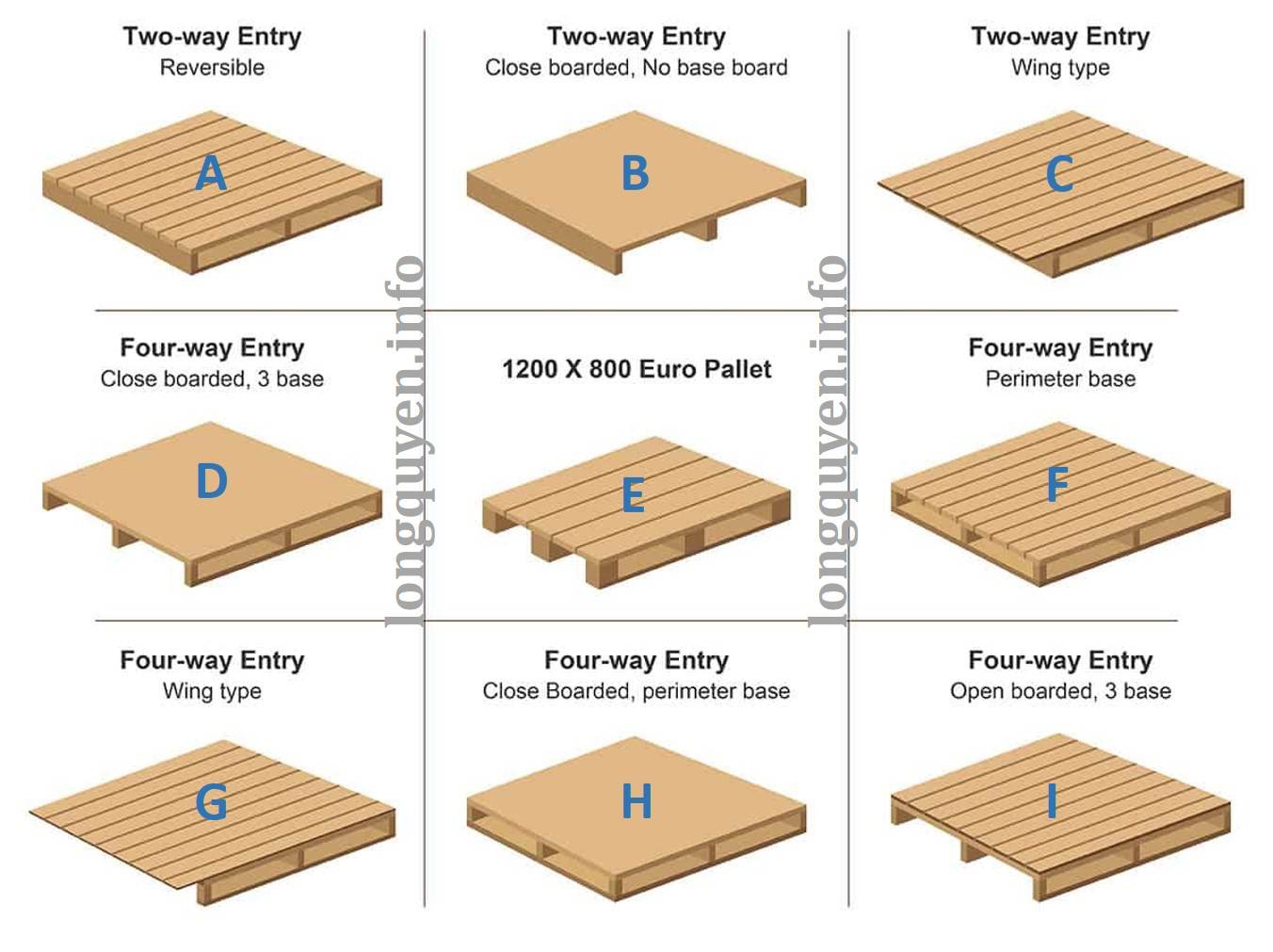
- 2-way pallet lift: Forklifts approach from 2 sides.
- Pallet 4 way lift: Forklifts reach from all sides, more flexible.
- Sealed pallets: Flat surface, limiting dirt from falling down.
- Open-sided pallets: Horizontal bar surface, lighter, breathable.
6. Application of each type of pallet in cargo storage
- Cold Storage: Plastic or metal pallets for moisture resistance and low temperature.
- Export warehouse: The pallet meets ISPM 15 (termite resistant).
- Heavy Industrial Warehouse: Large load-bearing steel pallets.
7. How to choose the right Pallet for warehouse racking system
- Determine the type of cargo: Heavy, light, fragile or not.
- Check the shelf size: Avoid pallets that are too large or too small.
- Choose the right material: Based on the warehouse environment.
- Budget estimation: Optimize between cost and pallet life.

8. Maintenance and Safety Factors When Using Pallets
- Inspect the pallet periodically.
- Do not exceed the allowable load.
- Arrange goods evenly, avoiding load deviation.
- Clean pallets to extend their lifespan.
Pallet Sizes for Cold Storage
In cold rooms and freezers (typically 0 to +5 °C chilled, −18 to −30 °C frozen), the pallet footprint is usually the same 1200 × 1000 mm or 1200 × 800 mm standard, but the material matters more than the size:
- Plastic (HDPE/PP) pallets are preferred: they do not absorb moisture, are easy to wash and keep their strength at low temperature. Choose a grade rated for freezer use, as some plastics become brittle below −20 °C.
- Wooden pallets must be kiln-dried; wet wood freezes, swells and can crack, and is often not accepted for food-safety audits.
- Steel or galvanised pallets suit heavy frozen loads and drive-in or shuttle racking, where pallets must be dimensionally consistent.
- Allow extra clearance (about 75–100 mm each side) because operators wear gloves and visibility is reduced by frost.
Matching Pallet Size to Your Racking
Pallet size determines beam length, frame depth and aisle width. Typical selective racking dimensions for the most common pallets are:
| Pallet (mm) | Entry direction | Beam length for 2 pallets | Beam length for 3 pallets | Frame depth |
|---|---|---|---|---|
| 1200 × 1000 | 1000 side facing aisle | about 2,300 mm | about 3,300 mm | about 1,000–1,100 mm |
| 1200 × 800 (Euro) | 800 side facing aisle | about 1,800–1,900 mm | about 2,700 mm | about 1,100 mm |
| 1100 × 1100 | either side | about 2,500 mm | about 3,600 mm | about 1,000 mm |
Values are typical planning figures – exact beam lengths depend on load, clearances (usually 75–100 mm between pallets and uprights) and the forklift used. For dense storage of uniform pallets, compare selective pallet racking with double deep racking.
Pallet Load Capacity: Static, Dynamic and Racking Loads
Every pallet has three ratings: static load (on the floor, often 4,000–6,000 kg), dynamic load (moved by forklift or pallet truck, often 1,000–2,000 kg) and racking load (spanning between beams, often 500–1,200 kg). The racking load is the lowest and is the one that matters in a warehouse rack – if a pallet sags between beams, add pallet support bars or wire mesh decking.
Long Quyen designs pallet racking systems around your actual pallets and also supplies steel pallets and storage pallets. Since 1997 – nearly 30 years and 500+ projects – we work under ISO 9001:2015 with a 24–60 month warranty. Call 0903 422 179 or get a free layout.
9. Infographics that summarize information
Below is an infographic that compares pallets according to durability and usage rate, making it easy for readers to visualize the advantages and disadvantages of each type.

10. Frequently Asked Questions (FAQs)
1. What is the size of the international standard pallet?
The most popular standard pallets in the world are 1200×1000 mm (Asia), 1200×800 mm (Euro Pallet – Europe) and 1219×1016 mm (USA).
2. Wooden pallet or plastic pallet, which is better?
Each type has its own advantages: cheap wooden pallets, easy to repair; Plastic pallets are more durable, resistant to mold, suitable for food and medical industries.
3. In what cases are metal pallets commonly used?
Mainly for ultra-heavy goods, high-temperature environments or superior durability requirements.
4. Can I use wooden pallets for export?
Yes, but pallets must be treated against termites and meet ISPM 15 standards.
5. What are the benefits of a 4-way pallet over a 2-way pallet?
The 4-way pallet is more flexible, the forklift can be accessed from all sides, saving time and optimizing space.
6. How often should pallets be inspected in stock?
Periodic inspections should be performed every 3–6 months to ensure safety and detect damage early.
11. Conclusion
Pallets play a key role in modern warehouse management, helping to optimize storage space, protect goods and reduce operating costs. Choosing the right type of pallet not only improves work efficiency but also helps businesses meet international standards in import and export.
If you are looking for the optimal pallet solution and warehouse racking system , contact Long Quyen Rack immediately for free advice and get the best quote. We are committed to providing standard pallets, quality warehouse shelves, and professional service. Learn more about our products: Long Quyen mezzanine floor shelving, portable iron shelving, selective racking, iron shelving, warehouse shelving
[wpforms id=”119062″]
- ISPM 15 Standard for Wooden Pallets
- Euro pallet specifications
- US Export Pallet Regulations
- Benefits of plastic pallets in logistics
- Metal pallets in heavy industry


