10 . Walmart
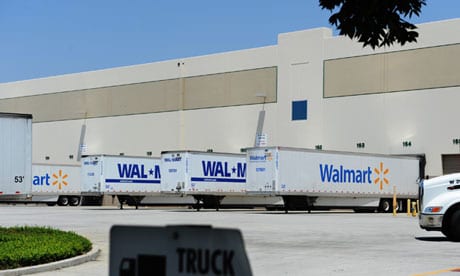
You can’t make an automated inventory list without including this giant warehouse inventory. We put Wal-Mart at number 10 because the system isn’t really a complete warehouse unless you consider the fact that all Wal-Mart stores are essentially an automated consumer warehouse. You could kind of say it’s automated because the large number of consumers moving in and out of Wal-Mart every day are like robots carrying goods up and down the aisles.
9 . COCA COLA

Coca Cola’s fully automated warehouse for the EMEA region is a large storage facility. Supplied by FKI Logistics, the Coca Cola warehouse holds up to 25,224 pallets and is designed to accommodate future expansion of the plant.
8 . Netflix

“Wait a minute, that doesn’t look anything like an automated warehouse!” That’s probably what you’re thinking if you watch this awesome Netflix video. You are right because people are definitely not robots. Netflix uses humans to send out DVDs of “Black Dog” and “A Walk to Remember” every day. Some futurists might be calling for robots to optimize Netflix, but with next-day shipping on every order, you can’t question the efficiency of this human-automated warehouse.
7 . AMAZON.COM

Amazon.com fulfillment centers are located around the world, including 18 in the United States, 20 in Europe, and 10 in Asia. Interestingly enough, none of Amazon.com’s fulfillment centers are located within 500 miles of its headquarters in Seattle, Washington. Amazon essentially used this massive network of strategic locations to become the largest online retailer in the world.
6 . FEDEX SUPERHUB

FedEx employs 4,000 people during the day and 8,000 at night so it is not a fully automated operation by any means. But the SuperHub is still an incredible facility with many automated solutions that keep FedEx connected to any point around the world. There are 300 miles of conveyor belts that help support the nearly 3.3 million packages that pass through Memphis International Airport each day.
5 . NIKE

Nike “Distribution” is an automated warehouse for the European region that holds more than 25,000 SKUs and is also where 43 million items are processed each year. At the heart of the system is a 280-meter long ring sorter, which processes both inbound and outbound orders automatically.
4 . IKEA
IKEA, the Swedish furniture manufacturer, uses automated warehouse services to send deliveries to locations around the world. With furniture found in so many people’s homes today, IKEA can be considered the leading furniture logistics company. IKEA generated around €23.5 billion in revenue in 2010, which means that IKEA has spent a significant amount of money on implementing automated warehouse solutions.
3 . UPS Worldport

Worldport is the worldwide hub for United Parcel Service and it is located at Louisville International Airport in Kentucky. Automated services used at sorting centers help UPS process 84 packers per second, or 416,000 per hour. UPS really loves logistics, and one reason it does is because of the automated distribution system at Worldport.
2 . DIAPERS.COM

Diapers.com was founded in 2005 and quickly became the largest specialty retailer for baby products. Diapers.com set out to provide diapers, wipes and formula to parents with free 1-2 day shipping, but eventually expanded to include clothing, car seats, strollers and toys.
1. Zappos

An empire built by Tony Hsieh, Zappos has become widely known for delivering items within 24 hours of purchase. With the help of its automated warehouses, Zappos grossed over $1 billion in 2009, which eventually led to Amazon.com paying a $1.2 billion deal to acquire Zappos. Zappos deployed a fully automated warehouse service from Kiva systems to help the company get the most out of its operations in Shepherdsville, Kentucky. Zappos is able to maintain free shipping, a 365-day return policy and a full-time call center only with the help of its automated warehouses. Zappos is fast, free, and easy… just like… Nevermind .
Source: http://www.supplychaindigital.com


