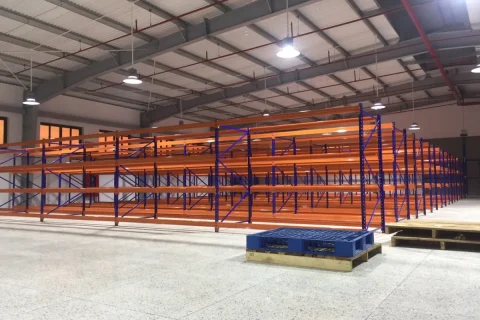
Inventory KPIs need to be established to evaluate production efficiency. Thanks to inventory standards (KPI), businesses can organize and store warehouses more effectively. KPIs are set in accordance with quality management methods such as 5S, TPM or WCM. Below are standard inventory metrics to track for factories.

1. Carrying cost of Inventory

Formula: Carrying cost of Inventory = Inventory Carrying Rate x Average Inventory Value
In there:
- Inventory Carrying Rate
- Average Inventory Value
2. INVENTORY TURNOVER
Inventory turnover is an inventory KPI that indicates how long it takes for inventory to be sold or shipped to a buyer. This index helps businesses grasp whether the product is selling well or not. As well as controlling which items are in stock, difficult or unsold. From these indicators, managers can develop timely and effective sales strategies. The higher the inventory turnover, the more efficient the business is. This is an inventory standard that needs special attention.
Formula: Inventory Turnover = (Cost of Goods Sold) / (Average Inventory)
In there:
- Cost of Goods Sold – Cost of goods sold
- Average Inventory – Average inventory value

3. INVENTORY TO SALES RATIO
Inventory to Sales ratio is affected by economic conditions and the company’s ability to withstand unforeseen events. This ratio helps warehouse managers identify cash flow problems early by keeping inventory levels inversely proportional to sales rates. This is the inventory KPI that needs attention.
Formula: Inventory to Sales Ratio = (End of Month Inventory Balance) / (Sales for Same Month)
In there:
- End of Month Inventory Balance – Inventory quantity at the end of the month
- Sales for Same Month – Sales for Same Month
If the inventory/sales ratio increases sharply, 1/2 of the following cases will occur:
- Investment in inventories is increasing faster than sales growth
- Revenue is down

4. INVENTORY ACCURACY
Inventory accuracy must correspond to the accuracy listed in the books. But in reality there is often a discrepancy between these two figures.
High inventory inaccuracies can lead to high return rates, dissatisfied customers, and ultimately increased overall costs. You can improve your inventory accuracy rate by conducting regular audits of your database.
Formula: Accuracy = Book Quantity / Actual Quantity

5. INVENTORY SHRINKAGE
This is an inventory KPI used to track inventory loss due to theft, damage, or employee and supplier errors. This index is recorded by comparing the goods recorded in the books with the actual quantity.
High shrinkage rates can have a negative impact on a company’s profitability. Therefore, it is important that warehouse managers have thorough processes in place to minimize this metric.
Formula: Shrinkage = (Cost of Book Inventory – Cost of Physical Inventory) / (Cost of Book Inventory)

6. TOTAL TIME TO COMPLETE AN ORDER PROCESS (Order Lead Time)
Lead Time is the time between when an order is placed and when the order is shipped. Some businesses call it order processing, while others call it order processing. Order fulfillment time directly affects customer satisfaction. Besides. It also affects the amount of inventory that needs to be carried at any given time.
Solutions to shorten Lead Time:
- Simplify your supply chain : Have a roadmap to streamline your product supplier list so you can track shipments more efficiently. If you’re dealing with too many specialty items, consider switching to more standard products that you can easily stock.

- Review your manufacturing process: Review your entire manufacturing process from start to finish to see what steps need to be improved and strengthened. If any step takes longer than necessary, the business may consider investing in automation. This helps reduce order fulfillment time and process other tasks faster. From there, inventory standards (KPI) will be improved.

LONG QUYEN SHELVING : “ Smarter & Safer, Faster Installation & Cheaper”
LONG KHUEN RACKING: “SMARTER & SAFER and QUICKER & CHEAPER”
Office: 79 Dao Tan, Giang Vo Ward, Hanoi, Vietnam.
Factory: 1085 Phuc Dien St., Xuan Phuong Ward, Hanoi, Vietnam
Production: pallet racks , warehouse racks , medium-duty racks , medium-duty racks , mobile racks , industrial racks , mold racks , mezzanine floors , stackable pallets , pallet racks,
Website: https://giakelongquyen.com
Email: contact@giakelongquyen.com
contact@longquyen.com
Phone: 0903422179 (Mr. Dat)
0903412296 (Mr. Hien)
0903434374 (Mr. Cam)